
Industrial spray application guide
Secondary Cooling Nozzles for Continuous Casting
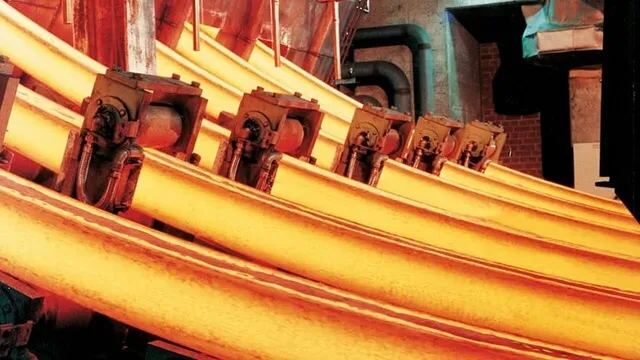
Secondary-cooling nozzles apply water or air-mist sprays to the strand after it exits the mold. Spray distribution and operating parameters influence heat extraction, solidification and temperature uniformity.
Engineering focus
What the spray system must accomplish
Caster speed, steel grade, roll geometry and zone conditions change the required cooling intensity. Water distribution must be stable over the operating range without creating avoidable hot or cold bands.
Inputs required before selection
- Caster type, strand geometry, grade and speed range
- Cooling-zone heat-flux target and control philosophy
- Nozzle-to-strand distance, roll layout and spray overlap
- Water/air quality, pressure, flow range and maintenance
- Connection, installation space and maintenance access
- Required documentation, test method and acceptance criteria
Comparison
Practical nozzle starting points
| Nozzle approach | Useful starting condition | What to verify |
|---|---|---|
| Hydraulic flat-fan spray | Stable water cooling within a defined zone | Check overlap and turn-down at low flow |
| Air-mist flat-fan spray | Wide control range and fine distribution | Requires reliable air and water control |
| Full-cone spray | Localized or geometry-specific coverage | Validate footprint and heat-transfer distribution |
Review method
How to move from requirement to a defensible selection
- Define the process envelope. Record normal, minimum, maximum and upset conditions rather than one nominal point.
- Choose the spray function. State whether the job is coverage, impact, atomization, evaporation, gas–liquid contact, washing or cooling.
- Check distribution in the real geometry. Review spacing, overlap, obstructions, wall contact, drainage and access.
- Validate materials and maintenance. Consider corrosion, erosion, solids, Filtration, cleaning and replacement intervals.
- Set an acceptance test. Use an observable measure such as coverage, fließen, temperature profile, pressure, droplet data or process result.
Related applications
Technical references
These sources define process or system context. Product suitability still requires project-specific engineering review.
- Metallurgical Research & Technology — Review of spray cooling in continuous casting
- Lechler — Secondary cooling in continuous casting
Last technical review: 31 July 2026
RFQ checklist
Send the operating data, not just a nozzle name
Include the application, fluid, fließen, pressure, temperature, spray distance, connection, material preference, drawings and acceptance criteria.