
What is an air atomizing nozzle?
An air atomizing nozzle, also called a two-fluid or twin-fluid nozzle, mixes compressed air (or another gas) with a liquid stream to break it into droplets far finer than a liquid-only, hydraulic nozzle can produce at the same flow rate. Because atomization is driven mainly by air energy rather than liquid pressure, these nozzles can generate droplets in the 1-50 micron range even when the liquid is supplied at very low pressure, or drawn in by suction with no pump at all.
This is the key difference from a standard hydraulic spray nozzle: droplet size is controlled primarily by air pressure and the air-to-liquid ratio (ALR), not by liquid pressure. That makes air atomizing nozzles the default choice whenever a process needs an ultra-fine, low-flow, tightly controllable mist.
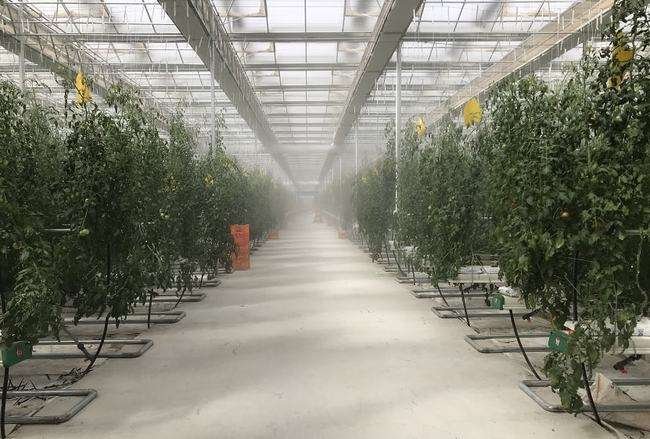
How an air atomizing nozzle works
Compressed air exits the nozzle cap at high velocity through a narrow orifice and meets the liquid stream either just inside the cap or immediately outside it. The high-speed air shears the surface of the liquid, stripping it into fine droplets that are then carried forward and dispersed by the same air stream. Three variables set the final result:
- Air pressure and volume – higher air energy generally produces finer droplets, up to the point where the liquid feed becomes the limiting factor.
- Air-to-liquid ratio (ALR) – the volume of air used per unit of liquid; a higher ratio produces a finer, lighter mist.
- Orifice and cap geometry – the size and angle of the air and liquid orifices set the spray pattern (ronde, flat fan, or hollow cone) and the practical droplet range.
Where the air and liquid actually meet – inside the cap, outside the cap, or drawn in by vacuum – is what separates the three core types covered in the next section.
Three core types: internal mix, external mix, siphon-fed
Every air atomizing nozzle on the market is built around one of three mixing principles. Picking the right one has more impact on uptime and spray quality than almost any other spec on the datasheet.
| Type | Where air meets liquid | Best fit |
|---|---|---|
| Internal mix | Inside the nozzle cap | Clean, low-viscosity liquids; the finest, most uniform droplets |
| External mix | Just outside the cap face | Viscous, abrasive, or particle-laden liquids; easier to clean and less prone to internal clogging |
| Siphon-fed | Vacuum draws liquid from an open reservoir | Low flow rates where a metering pump is undesirable, such as oil or lubricant misting |
Jeltecn’s range includes adjustable brass and stainless-steel air atomizing nozzles as well as a dedicated siphon air atomizing oil nozzle for pump-free lubrication and oil-misting duty. For the full breakdown of droplet size, viscosity handling, air consumption, and a decision checklist, read the dedicated comparison guide.
Read the full guide: Internal Mix vs. External Mix vs. Siphon-Fed Air Atomizing Nozzles →
Where air atomizing nozzles are used
Because they produce very fine, low-flow droplets from a compact nozzle, air atomizing nozzles show up across a wide range of industrial processes:
- Coating and painting – fine, even atomization for spray guns and automated coating lines, such as the A100 automatic atomizing nozzle.
- Evaporative cooling and gas conditioning – sub-50-micron mist that flashes to vapor for fast, even cooling.
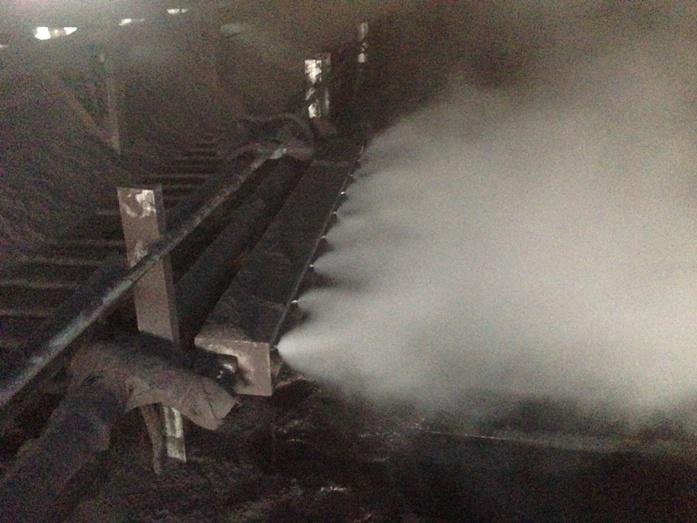
- Dust suppression – fine droplets sized to capture airborne particles without over-wetting the material.
- bevochtiging – precise, low-flow misting for controlled indoor or process humidity, such as the AAZ fine atomizing spray nozzle en brass air atomizing water mixing nozzle.
- Lubrication and release agents – metered misting of oils onto molds, dies, and moving parts, typically with a siphon-fed design.
Air atomizing vs. ultrasonic vs. fine atomizing nozzles
“Air atomizing,” “ultrasonic atomizing,” en “fine atomizing” are related but not interchangeable terms, and Jeltecn’s catalog covers all three:
- A conventional lucht verstuivingsmondstuk relies on continuous compressed air flow to shear the liquid; it is simple and robust but uses more air per hour of operation.
- An ultrasone verstuivingsmondstuk adds a resonant tip that vibrates the air/liquid mixture at high frequency, producing an even denser, finer fog at a lower air consumption for a given droplet size – see the ultrasonic atomizing nozzle guide and the head-to-head air atomizing vs. ultrasonic nozzles comparison.
- Fijne atomatiseringsmondstenen is a broader label for any nozzle – air or hydraulic – tuned for very small droplets and low flow; see the fine atomizing nozzle guide for how to choose between them.
Specifications to check before ordering
| Parameter | Why it matters |
|---|---|
| Free passage / orifice size | Sets clog resistance and minimum practical flow |
| Air consumption at your line pressure | Must match available compressor capacity; often quoted in Nm³/h or SCFM |
| Liquid flow rate and pressure | Confirms the nozzle can be fed at the required rate without starving atomization quality |
| Spray angle and pattern | Ronde, flat fan, or hollow cone – must match the coverage area and mounting distance |
| Materiaal | Brass for general water/oil duty; 303/316 stainless steel for corrosive or high-temperature fluids |
What to include in an RFQ
To get an accurate quote and avoid a second round of questions, confirm the following before you send a request:
- Fluid being sprayed, including viscosity and any suspended solids
- Target droplet size or the outcome you need (koeling, coating, dust capture, bevochtiging)
- Available compressed air pressure and volume at the nozzle
- Mounting thread size and type, and material preference
- Ambient/process temperature and required duty cycle
Jeltecn air atomizing nozzle products
All of the following are available with OEM/ODM configuration; confirm the exact operating point against a model-specific datasheet before releasing a purchase order.
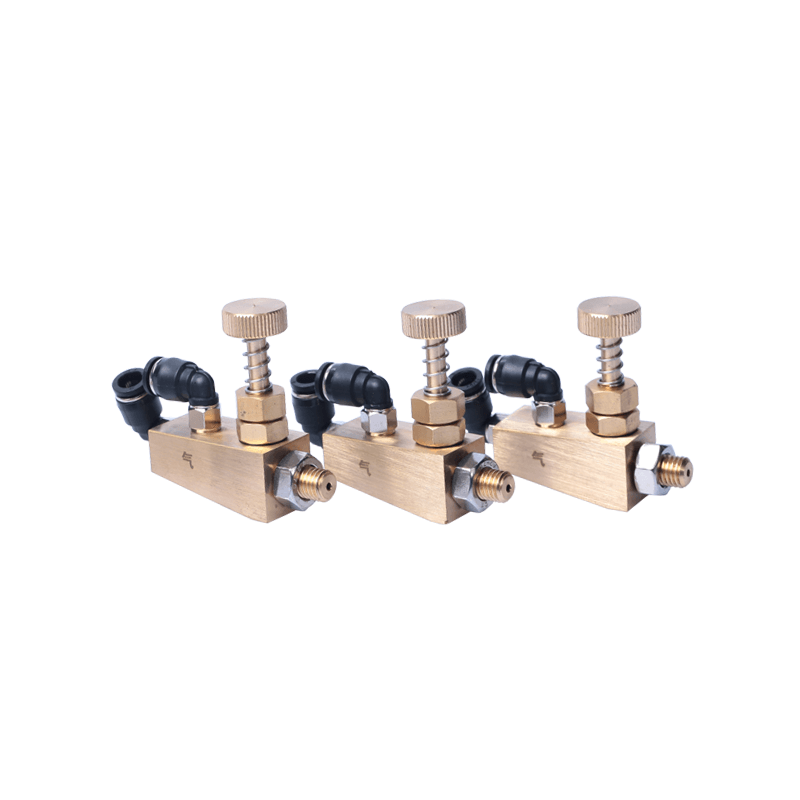
- Brass Air Atomizing Water Mixing Nozzle – adjustable, for humidification
- Siphon Air Atomizing Oil -mondstuk – pump-free oil misting and lubrication
- Adjustable Air Atomizing Nozzle – for humidification
- A100 Automatic Atomizing Nozzle – mini spray gun for painting
- AAZ Fine Atomizing Spray Nozzle – for humidification
- DK automatisch fijn verstuiver mondstuk – independent gas/liquid control
- Ultrasone verstuivingsmondstuk – resonant tip for dense, fine fog
Need help narrowing down a model? Contact Jeltecn’s engineering team with your fluid, flow, and available air supply and we’ll recommend a specific nozzle and size.