
Industrial spray application guide
Industrial Disinfection Spray Nozzles
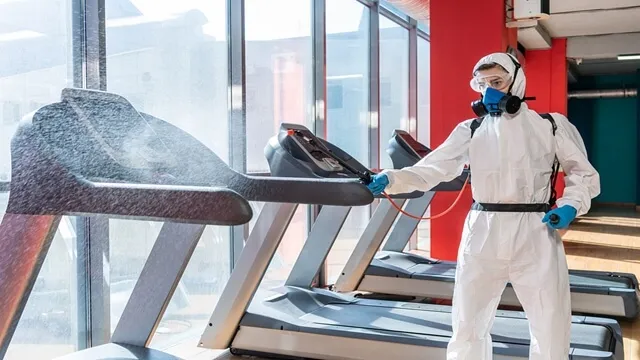
Disinfection spray nozzles distribute an approved chemical solution over a target surface or within a validated process. Effective disinfection depends on cleaning, label directions, concentration, wet contact time and full coverage—not on droplet size alone.
Engineering focus
What the spray system must accomplish
Fine mist can increase drift and inhalation exposure, while coarse spray may miss complex surfaces. Chemical compatibility, worker protection, runoff and validation must be reviewed.
Inputs required before selection
- Target organism/process and approved product label
- Surface geometry, pre-cleaning and required wet contact time
- Droplet/coverage needs and acceptable drift
- Material compatibility, ventilation and worker safety
- Connection, installation space and maintenance access
- Required documentation, test method and acceptance criteria
Comparison
Practical nozzle starting points
| Nozzle approach | Useful starting condition | What to verify |
|---|---|---|
| Flat-fan spray | Directed surface coverage and conveyor applications | Set overlap and maintain wet contact time |
| Full-cone spray | Three-dimensional equipment or enclosure coverage | Control runoff and inaccessible shadow areas |
| Air-atomizing spray | Fine controlled application in engineered systems | Assess inhalation exposure and ventilation |
Review method
How to move from requirement to a defensible selection
- Define the process envelope. Record normal, minimum, maximum and upset conditions rather than one nominal point.
- Choose the spray function. State whether the job is coverage, impact, atomization, evaporation, gas–liquid contact, washing or cooling.
- Check distribution in the real geometry. Review spacing, overlap, obstructions, wall contact, drainage and access.
- Validate materials and maintenance. Consider corrosion, erosion, solids, filtration, cleaning and replacement intervals.
- Set an acceptance test. Use an observable measure such as coverage, flow, temperature profile, pressure, droplet data or process result.
Related applications
Technical references
These sources define process or system context. Product suitability still requires project-specific engineering review.
Last technical review: 31 July 2026
RFQ checklist
Send the operating data, not just a nozzle name
Include the application, fluid, flow, pressure, temperature, spray distance, connection, material preference, drawings and acceptance criteria.