
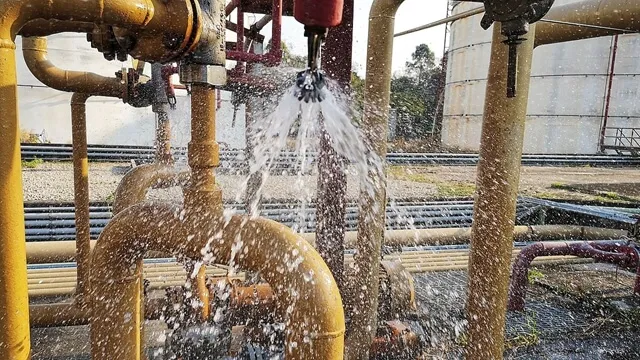
Industrial spray application guide
Water Mist Nozzles for Fire Protection Systems
Water-mist nozzles create fine sprays as part of a listed or approved fire-protection system. Suitability depends on the tested application, hazard, enclosure, pressure, nozzle spacing and system controls.
Engineering focus
What the spray system must accomplish
Water-mist performance is application-specific. A component that produces fine droplets is not automatically an approved fire-suppression nozzle or system.
Inputs required before selection
- Protected hazard and enclosure classification
- Applicable listing, approval and authority requirements
- System pressure, nozzle spacing and obstruction rules
- Water supply, corrosion, inspection and replacement criteria
- Connection, installation space and maintenance access
- Required documentation, test method and acceptance criteria
Comparison
Practical nozzle starting points
| Nozzle approach | Useful starting condition | What to verify |
|---|---|---|
| Automatic water-mist nozzle | Approved occupancies using heat-responsive elements | Use only within its listing and design manual |
| Open water-mist nozzle | Deluge-style or local-application systems | Requires detection, controls and approved spacing |
| Conventional water-spray nozzle | When larger droplets and water spray are specified | Different standard and hydraulic basis |
Review method
How to move from requirement to a defensible selection
- Define the process envelope. Record normal, minimum, maximum and upset conditions rather than one nominal point.
- Choose the spray function. State whether the job is coverage, impact, atomization, evaporation, gas–liquid contact, washing or cooling.
- Check distribution in the real geometry. Review spacing, overlap, obstructions, wall contact, drainage and access.
- Validate materials and maintenance. Consider corrosion, erosion, solids, filtration, cleaning and replacement intervals.
- Set an acceptance test. Use an observable measure such as coverage, flow, temperature profile, pressure, droplet data or process result.
Related applications
Technical references
These sources define process or system context. Product suitability still requires project-specific engineering review.
- NFPA 750 — Standard on Water Mist Fire Protection Systems
- NFPA — Inspection, testing and maintenance context for water-based systems
Last technical review: 31 July 2026
RFQ checklist
Send the operating data, not just a nozzle name
Include the application, fluid, flow, pressure, temperature, spray distance, connection, material preference, drawings and acceptance criteria.