
Since IMO 2020 lowered the global sulfur cap on marine fuel, vessels without access to compliant low-sulfur fuel at every port have increasingly turned to exhaust gas cleaning systems (EGCS), commonly called scrubbers, to continue burning heavier fuel while still meeting emission limits. Inside these scrubbers, spray nozzles are the component doing the actual work of contacting exhaust gas with seawater or alkaline wash water to strip out sulfur oxides, and they do it in a genuinely harsh environment: hot exhaust gas, acidic washwater, and continuous duty at sea with limited opportunity for maintenance. Spiral nozzles are widely specified in this application for the same reason they’re used in land-based FGD systems, clog resistance under demanding conditions.
Quick answer: Spiral nozzles are used in marine exhaust gas cleaning systems (EGCS) because their open flow passage resists fouling from soot and particulate in the exhaust stream and scaling from acidic washwater, while producing the fine, well-distributed spray needed to maximize SO2 and SO3 absorption inside the scrubber tower.
How Spiral Nozzles Function Inside a Marine Scrubber
Marine EGCS units spray seawater or alkaline-treated water into the exhaust stream as it passes through the scrubber tower, and the spray needs to maximize contact surface area between liquid droplets and the sulfur oxides in the gas to achieve efficient absorption. Spiral nozzles produce a full cone or hollow cone spray pattern from an open helical ramp, avoiding the small vaned passages that soot, carbon particulate, and scale would otherwise clog over continuous operation. This matters more at sea than in most land-based installations, since a scrubber cannot simply be shut down for nozzle cleaning mid-voyage the way a shore-based system might be taken offline during a planned outage.

Open-Loop, Closed-Loop, and Hybrid Systems
Open-loop scrubbers pump raw alkaline seawater through the tower and discharge the washwater overboard after treatment, relying on the natural alkalinity of seawater to neutralize absorbed sulfur compounds. Closed-loop systems recirculate freshwater dosed with caustic soda, discharging only a small treated bleed stream, which is typically required in ports or waters where open-loop discharge is restricted. Hybrid systems can switch between the two modes depending on location and regulation. Spiral nozzles are used across all three configurations, though washwater chemistry and solids content differ enough between open-loop and closed-loop operation that material selection should be confirmed against your specific system design.
Material Selection for EGCS Washwater
Washwater inside a marine scrubber is typically acidic, commonly in the pH 2 tot 3 range once sulfur oxides have been absorbed, and inlet exhaust gas temperatures can run from roughly 200°C to 250°C at the point where spray first contacts the gas stream. This combination of thermal load and acid exposure calls for materials beyond standard stainless steel in many installations: high-grade materials such as super duplex stainless steel or silicon carbide are commonly specified specifically to withstand this combination of heat and acidic attack over years of continuous marine service. Confirm your system’s washwater pH range, chloride content, and inlet gas temperature, including any upset conditions, before finalizing nozzle material.
| Condition | Typical Range | Material Implication |
|---|---|---|
| Washwater pH | ~2-3 (acidic) | Requires acid-resistant alloys or non-metallics |
| Inlet exhaust temperature | ~200-250°C | Requires high-temperature-rated materials |
| Particulate/soot content | Variable by fuel and engine load | Favors open-passage, clog-resistant designs |
Maintenance and Fouling Checks at Sea
Even a clog-resistant nozzle benefits from a monitoring routine, since salt scaling, particulate buildup, and localized acid corrosion around nozzle tips can develop gradually over long voyages. Standard EGCS maintenance schedules typically include regular checks of washwater pH, turbidity, and circulation pump performance, and a drop in scrubbing efficiency without an obvious cause is often traced back to gradual nozzle wear or partial fouling rather than a single sudden failure. Keeping spare nozzles onboard sized to your existing system, along with your original specification sheet, shortens the time needed to diagnose and correct a performance drop during a voyage. For a broader look at how the spiral design resists clogging and where it fits against other nozzle types, see our full Spiral Nozzle Guide, and our page on Marine Exhaust Gas Scrubber Spray Nozzles for related system-level considerations.
Specifying Nozzles for Your Vessel
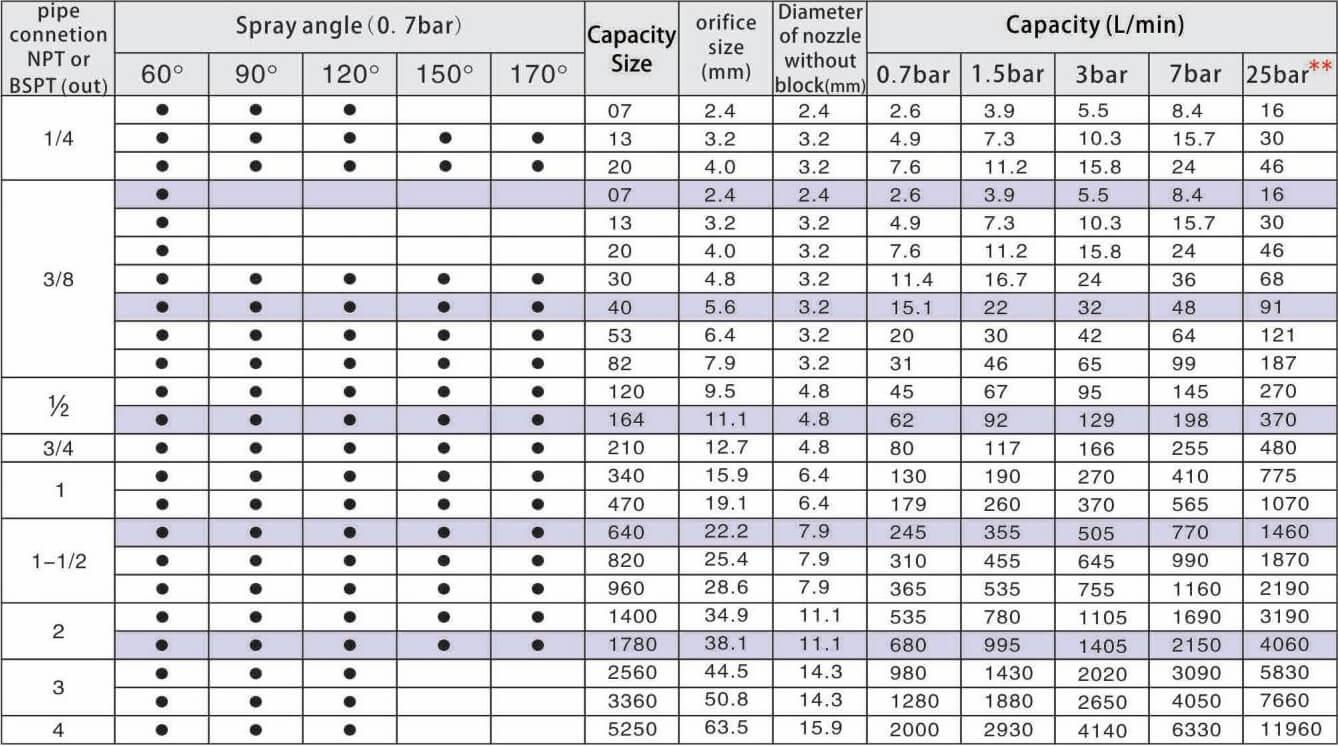
Share your scrubber type (open-loop, closed-loop, or hybrid), washwater pH and chloride range, inlet gas temperature, required flow rate and pressure, and existing nozzle specification if you’re sourcing replacements, and our team can confirm the right spiral nozzle size and material for your system.
Frequently Asked Questions
Why are spiral nozzles preferred over vaned nozzles in marine scrubbers?
The open helical flow passage tolerates soot and particulate in the exhaust stream far better than a small vaned channel, reducing the risk of blockage during continuous operation at sea.
What material is recommended for closed-loop caustic soda systems?
Material selection depends on your specific caustic concentration, chloride content, and temperature; high-alloy stainless steel or silicon carbide are common choices, but confirm against your system’s exact washwater chemistry.
How often should EGCS nozzles be inspected?
Most operators check nozzle condition alongside routine washwater quality monitoring (pH, turbidity) rather than on a fixed calendar interval, since fouling rate depends on fuel quality and engine load.
Talk to Our Engineering Team
Share your scrubber specifications and washwater chemistry, and we’ll help you specify the right spiral nozzle for reliable EGCS performance. Contact us for an application review, or view the Spiral Spray Nozzle product page.