
Chain and conveyor lubrication is one of the least visible but most costly maintenance items on a high-speed food, beverage, or packaging line. Under-lubricated chains run hot, wear faster, and eventually cause unplanned stops; over-lubricated chains waste lubricant, attract debris, and on food-contact lines create a contamination and slip-hazard risk. Flat fan nozzles are widely used to apply lubricant (or lubricant-water emulsion) in a thin, even film precisely along the chain or conveyor rail, rather than as a heavy, wasteful stream.
Quick answer: Flat fan nozzles apply chain and conveyor lubricant as a controlled, linear film along the rail or chain path, giving consistent coverage at low flow rates, which reduces lubricant consumption, minimizes overspray onto product and floors, and supports the washdown and sanitation standards required on food and beverage lines.
Why Spray Pattern Matters for Chain Lubrication
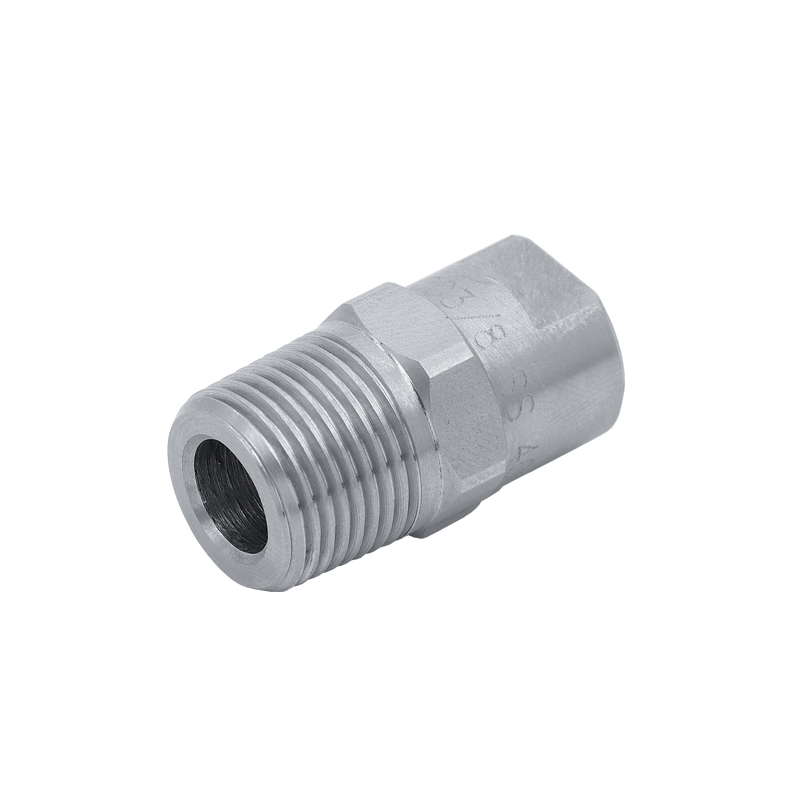
A chain or conveyor rail is a long, narrow target moving continuously past a fixed application point. A flat fan spray aligned along the rail direction lays down a thin, uniform strip of lubricant exactly where it is needed, on the wear surface between chain and rail, without soaking the surrounding frame or dripping onto product below. Round-pattern nozzles or simple drip systems tend to either under-cover long sections between drops or over-apply at the drip point, both of which increase lubricant cost and housekeeping burden. Precision flat fan application is also easier to dose accurately, which matters when lubricant is metered by a central automatic lubrication system rather than applied manually.
Voedsel, Drank, and Packaging Line Considerations
These lines add requirements beyond simple mechanical lubrication. Many use food-grade (H1-rated) lubricants or lubricant-water dilutions, which are typically thinner and require accurate, low-flow metering to avoid waste and product contact risk. Frequent washdown cycles mean nozzle bodies and mounting hardware need to tolerate repeated exposure to hot water, caustic, or sanitizer without corroding or clogging. And because these lines often run 24 hours with short changeover windows, nozzles need to hold a consistent pattern for long periods between manual cleaning or replacement. For related coverage of nozzle use earlier in the food production process, see our article on spray nozzles in food processing, and for sanitation-focused spraying on the same lines, our Industrial Disinfection Spray Nozzles page.
Choosing Spray Angle and Flow Rate
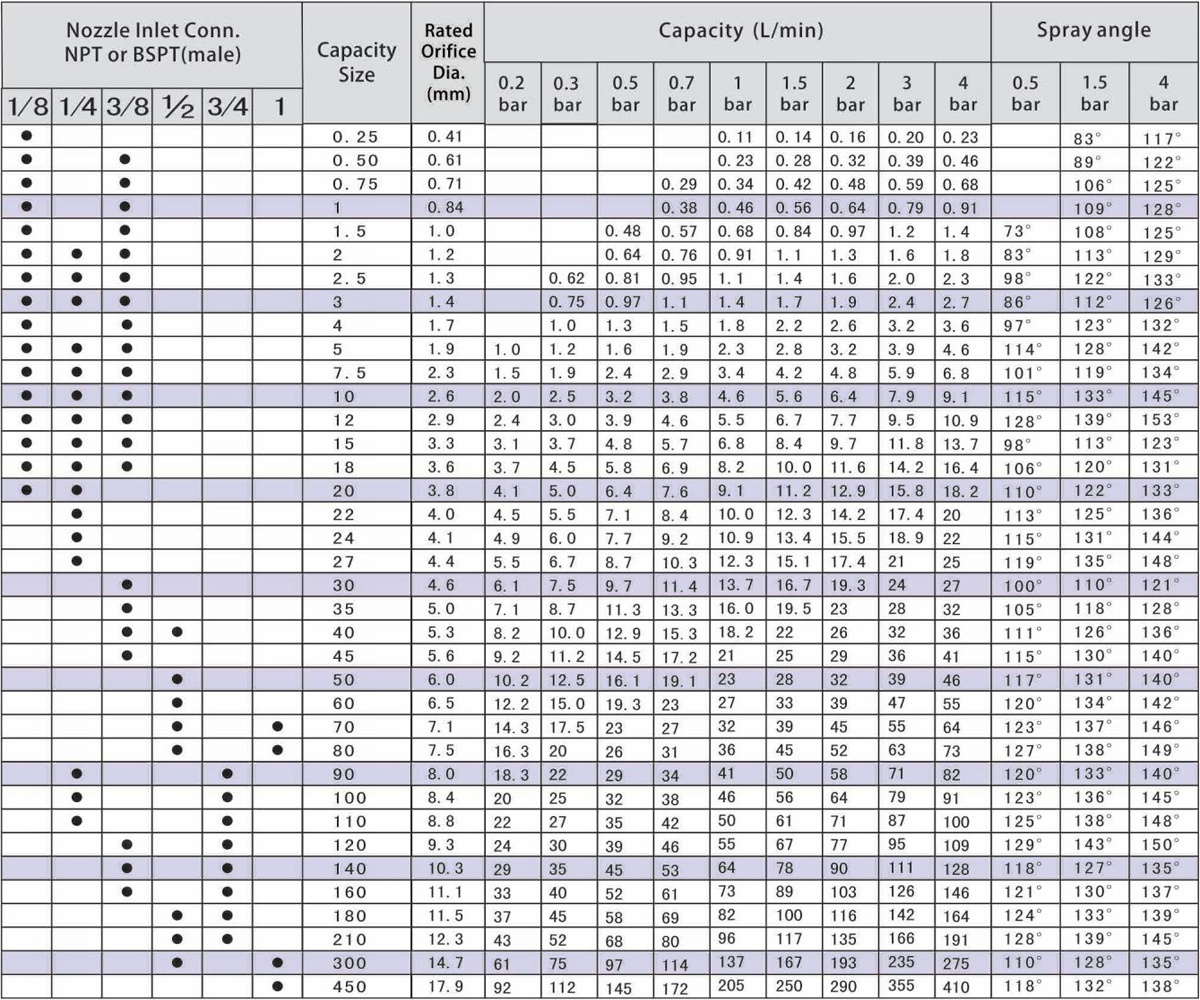
Chain lubrication typically calls for narrow to standard flat fan angles at very low flow rates, since the goal is a thin film on a narrow wear track, not broad coverage. Wider flat fan angles are more commonly used for conveyor belt or rail washdown and rinse stations rather than lubrication itself. Flow rate is usually the more important variable than spray angle for lubrication duty: too high a rate wastes lubricant and creates slip hazards on walkways beneath the conveyor, while too low a rate leaves sections of chain running dry between application points.
| Product | Typical Spray Angle | Line Application |
|---|---|---|
| Narrow Angle Flat Fan Nozzle | ~15°–25° | Precise chain and rail lubrication film |
| Standard Flat Fan Spray Nozzle | ~40°–65° | Wider lubrication zones, light rinse-lube combination stations |
| Wide-Angle Flat Fan Spray Nozzle | ~80°–110° | Conveyor belt washdown and sanitizing, not typically lubrication |
For complete orifice and flow-rate specifications, see the Flat Fan Spray Nozzle selection guide. If your line also needs broader rinse or sanitizing coverage alongside lubrication, our Flat Fan vs Full Cone Nozzle comparison can help you decide which pattern fits each station.
Reducing Lubricant Waste and Downtime
Switching from drip or manual lubrication to metered flat fan spray application typically reduces lubricant consumption because coverage is continuous and proportional to line speed rather than intermittent and operator-dependent. It also reduces unplanned downtime from chain wear, since consistent film coverage prevents the dry-running periods that accelerate wear between manual lubrication rounds. Pairing the right nozzle with a timer or line-speed-linked controller ensures lubricant is applied only when the line is running, further cutting waste during stops.
Specifying Nozzles for Your Line
Share your chain or rail width, lubricant type and viscosity, target flow rate per application point, washdown chemical exposure, and food-contact or sanitation requirements, and our team can recommend spray angle, orifice size, and material (stainless steel is standard for washdown environments).
Frequently Asked Questions
Can flat fan nozzles handle food-grade H1 lubricants?
Ja, flat fan nozzles are compatible with most H1-rated lubricants and lubricant-water dilutions; viscosity affects flow rate and orifice sizing, so share your lubricant specification when requesting a recommendation.
How do I stop lubricant from dripping onto product below the conveyor?
Correct flow rate and spray angle sized to the chain width, combined with accurate mounting distance, is the main control; a narrower angle at lower flow generally reduces overspray risk compared with an oversized wide-angle nozzle.
Do these nozzles need to be removed during washdown?
Stainless steel flat fan nozzles are generally washdown-rated and do not need removal for standard sanitation cycles, though harsh caustic or high-temperature CIP cycles should be checked against your specific nozzle material rating.
Get a Recommendation for Your Line
Tell us about your conveyor, chain, and lubricant specifications, and we will help you select the right flat fan nozzle for efficient, low-waste lubrication. Contact our team, or browse the full Flat Fan Nozzle range.