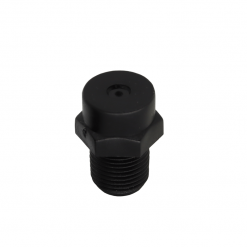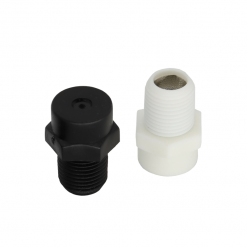
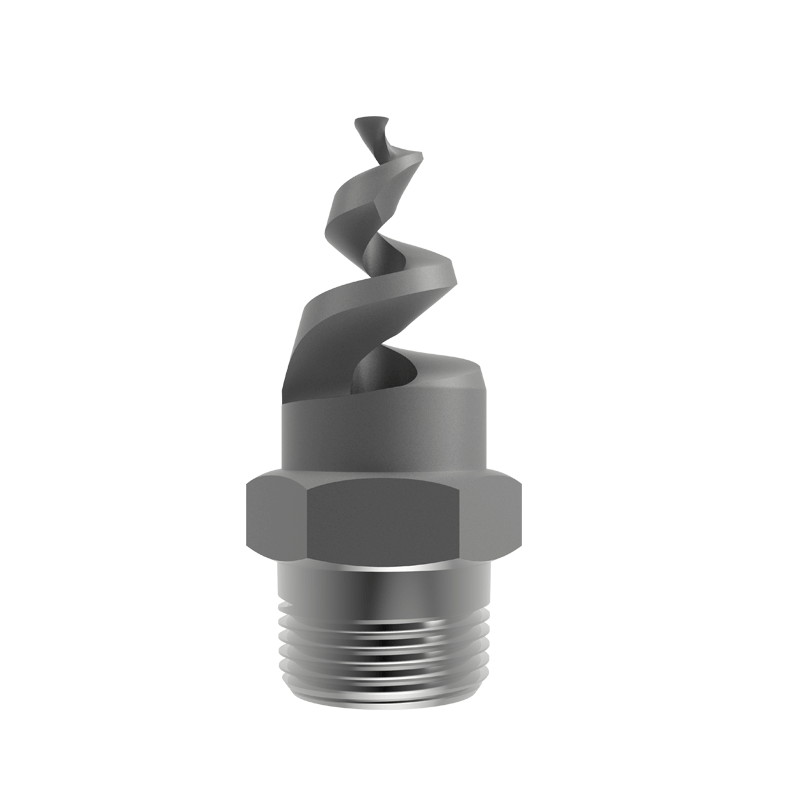

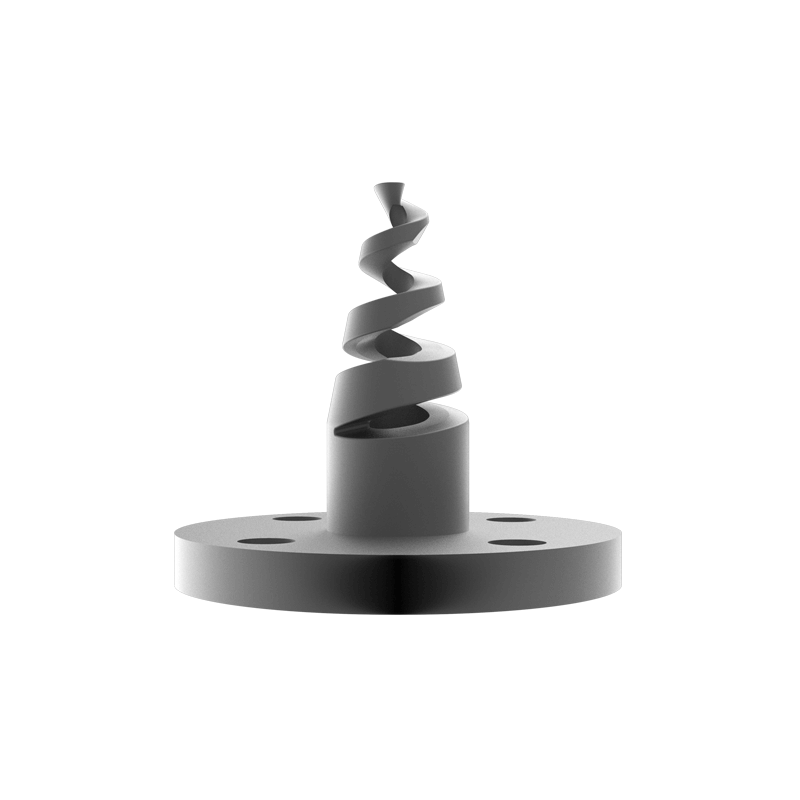
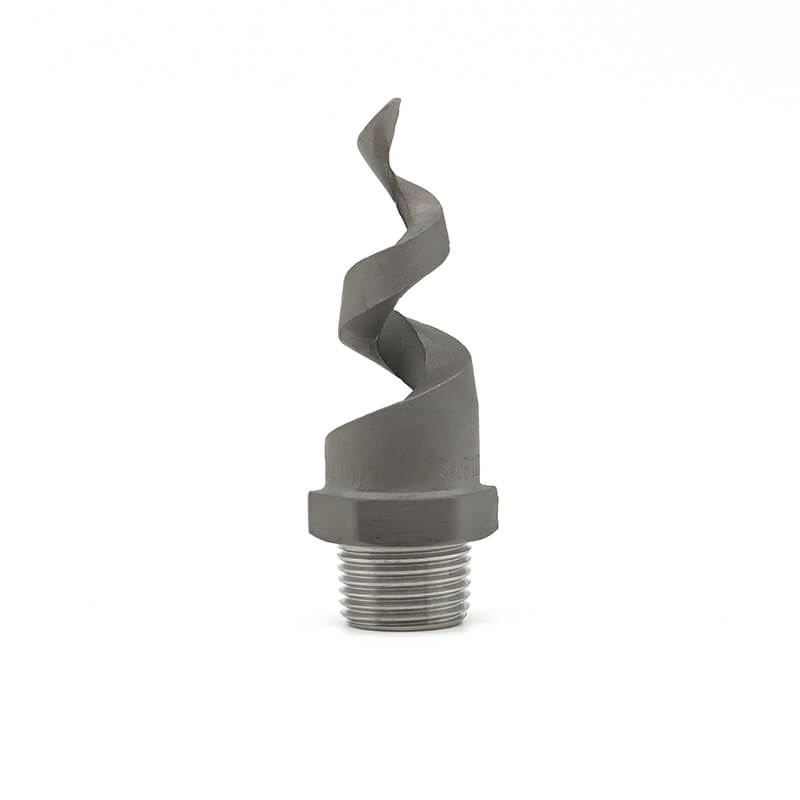
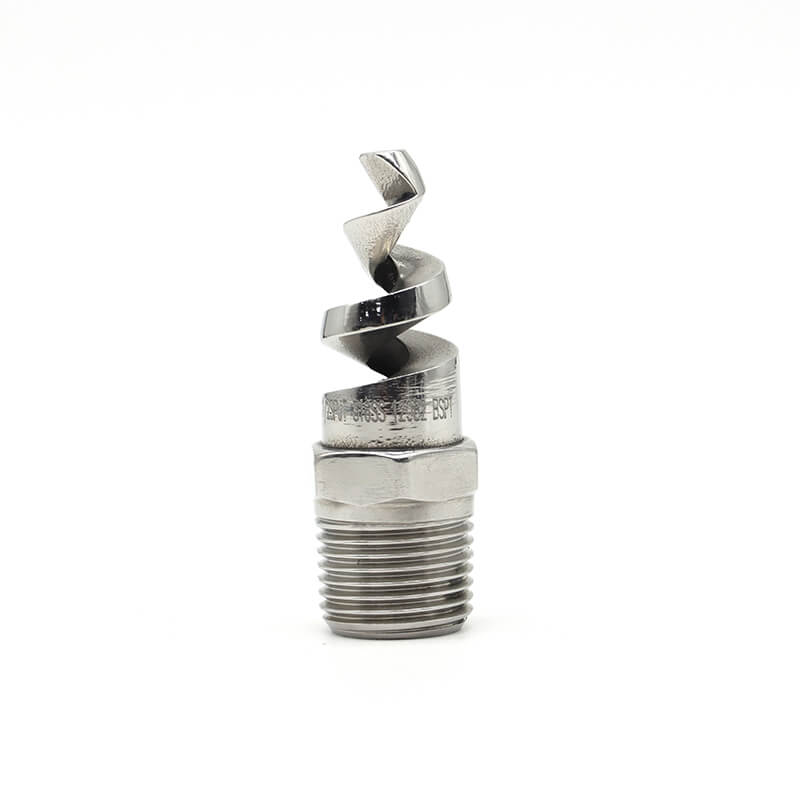
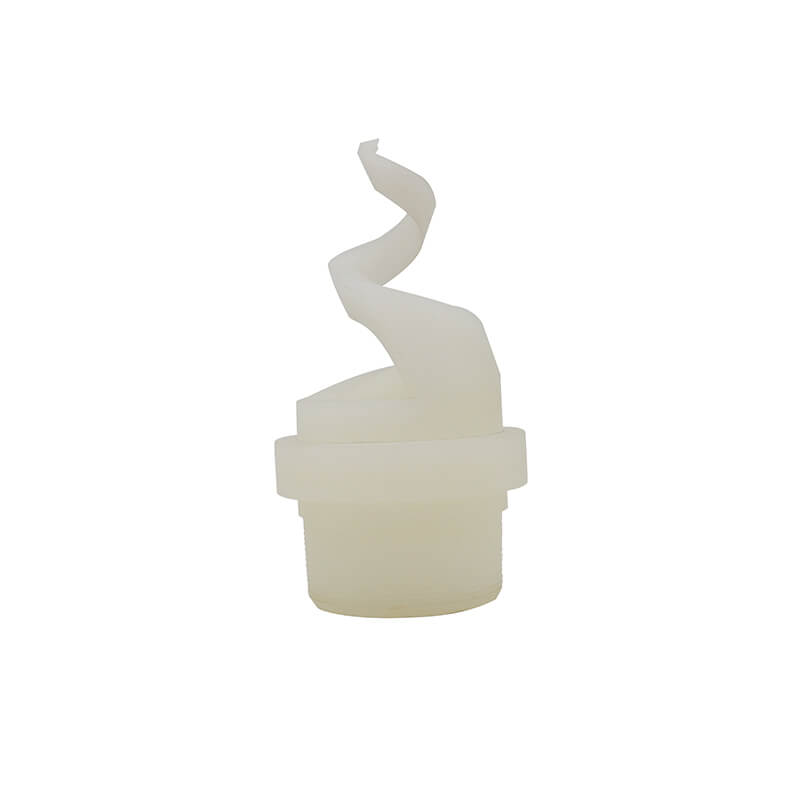

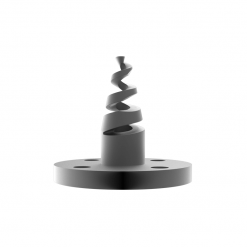
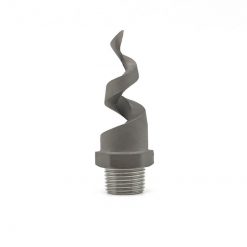
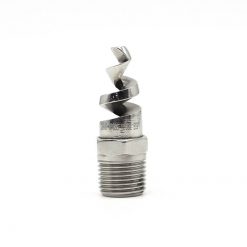
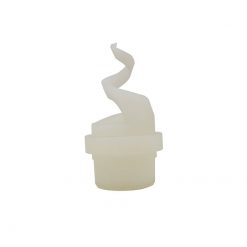
Jeltecn spiral spray nozzles produce full-cone or hollow-cone coverage through an open spiral impact surface. They are designed for industrial gas scrubbing, flue-gas desulfurization, cooling, quenching, washing and dust-control duties where buyers need broad coverage and a flow path with no internal vane.
Request a spiral nozzle quotation Read the engineering guide
Available Spiral Spray Nozzle Specifications
The ranges below describe the options shown in Jeltecn’s current product data. Final model selection must be checked against the required flow at the nozzle, operating pressure, liquid properties, connection and installed spray geometry.
| Specification | Available range or option |
|---|---|
| Brand | Jeltecn |
| Nozzle type | Spiral spray nozzle |
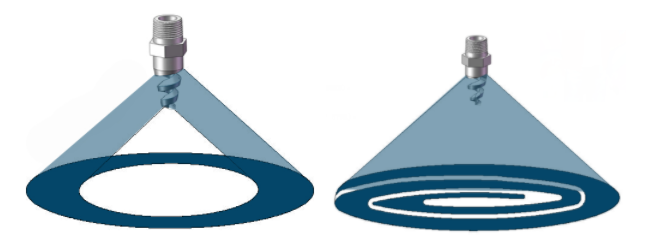
| Spray pattern | Full cone or hollow cone |
| Spray angle | 60°–180° |
| Thread size | 1/4, 3/8, 1/2, 3/4, 1, 1-1/4, 1-1/2, 2, 3 and 4 inch |
| Connection | Male or female; BSPT or NPT |
| Orifice diameter | 2.4–63.5 mm |
| Water pressure | 0.7–25 bar |
| Published capacity range | 2.6–11,960 L/h; confirm the required model and duty point before ordering |
| Published material options | 303 stainless steel, 316 stainless steel, brass and PVDF |
How the Spiral Nozzle Produces the Spray
Liquid enters the nozzle and follows the exposed spiral surface. Each turn divides and redirects the liquid into concentric spray sheets that form either a filled or ring-shaped cone. Because the design does not use an internal vane, the passage is comparatively open. This can reduce sensitivity to blockage, but it does not make the nozzle clog-proof.
Filtration, particle size, solids concentration, shutdown deposits, liquid chemistry and the selected orifice still determine service reliability. Provide these inputs when the nozzle will handle recirculated water, slurry or wastewater.
Full-Cone or Hollow-Cone Pattern?
| Decision | Full-cone spiral | Hollow-cone spiral |
|---|---|---|
| Liquid distribution | Liquid is distributed through the cone volume. | More liquid is concentrated toward the cone perimeter. |
| Typical evaluation | Volumetric coverage, washing, scrubbing and dust-control zones. | Perimeter contact, cooling or applications that require an annular pattern. |
| Check before selection | Distribution uniformity, overlap, wall clearance and required flow. | Ring coverage, spray distance, gas flow and carryover risk. |
Pattern names alone are not enough to select a nozzle. Confirm the installed spray distance and allowable overlap, then review the application with the system engineer. See the spiral nozzle comparison for additional decision factors.
Common Industrial Applications
- Gas scrubbing and flue-gas treatment: distributing scrubbing liquid within ducts, towers or process vessels.
- FGD systems: evaluating spray coverage, slurry passage, material compatibility and maintainability for limestone-slurry service.
- Gas cooling and quenching: selecting flow, spray angle and droplet behavior for the available residence path.
- Dust suppression: wetting airborne or deposited dust around transfer, crushing and bulk-material zones.
- Process washing and rinsing: broad-area liquid distribution where an open spiral passage is useful.
For application-specific checks, review the FGD spiral nozzle guide and dust-suppression spiral nozzle guide.
Selection Inputs Required for a Quotation
| Input | What to provide |
|---|---|
| Liquid | Name, concentration, temperature, viscosity, specific gravity and solids information. |
| Hydraulic duty | Required flow per nozzle and minimum, normal and maximum pressure at the nozzle inlet. |
| Coverage | Spray angle, spray distance, vessel or duct dimensions, nozzle quantity and acceptable overlap. |
| Installation | NPT or BSPT, male or female thread, orientation, insertion length and maintenance clearance. |
| Material | Chemical exposure, abrasion, temperature and any site material restrictions. |
| Commercial | Required quantity, delivery destination and drawing or installation photo when available. |
Use the spiral nozzle sizing and material guide to prepare these inputs.
Performance Data and Available Configurations
Full-Cone and Hollow-Cone Spiral Nozzle Data
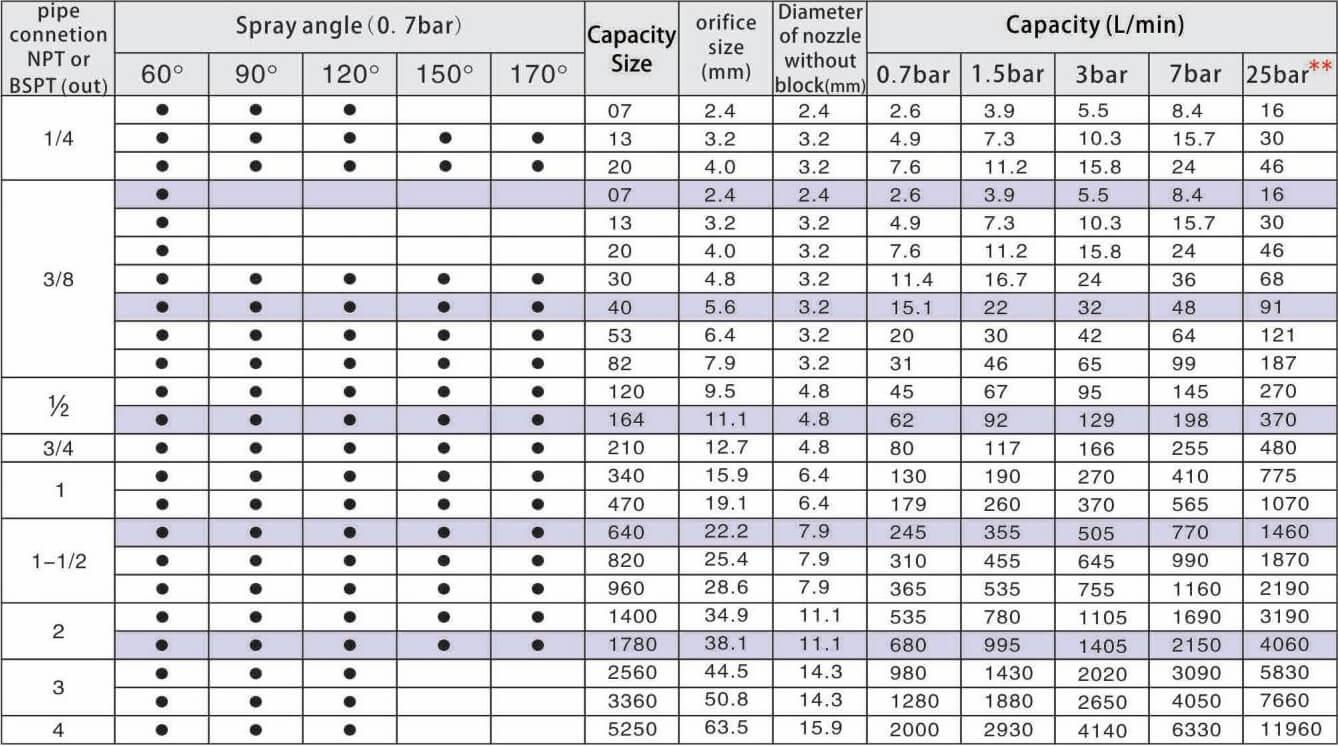
Adjustable Spiral Nozzle Data

Flanged Spiral Nozzle Data

Installation and Maintenance Limits
- Confirm pressure at the nozzle after piping, valve, elevation and filter losses.
- Do not assume the nominal spray angle equals the installed wetting angle under every pressure and liquid condition.
- Provide flushing and inspection access when the liquid can crystallize, settle or form deposits.
- Inspect the orifice and spiral surface if flow, pattern or coverage changes.
- Validate coverage with the actual lance arrangement before production release.
Frequently Asked Questions
Is a spiral nozzle clog-proof?
No. Its open path can improve free passage compared with designs that contain an internal vane, but filtration, solids, deposits, orifice size and cleaning practice still matter.
Can Jeltecn supply NPT and BSPT connections?
The published product options include NPT and BSPT connections in male or female configurations. Confirm the exact thread size and installation drawing with the quotation.
Which material should I select?
Choose material from the liquid chemistry, temperature, abrasive loading and mechanical environment. A material name alone does not establish compatibility; process-owner approval or a controlled compatibility test may be required.
What information is needed to size the nozzle?
Send the liquid properties, required flow per nozzle, pressure at the nozzle, pattern, spray angle, spray distance, connection, material restrictions and quantity.
For low flow, distorted pattern, dry zones or repeated deposits, use the spiral nozzle troubleshooting and maintenance guide before changing the nozzle model.
Send your spiral nozzle duty for review
Jeltecn is a registered brand of Melinco Precision Technology Co., Ltd. Product suitability must be confirmed for the specific process and installation.