
When a spiral nozzle loses flow, changes pattern or wets the wrong area, check the hydraulic system before replacing the nozzle. Pressure at the nozzle, filter condition, deposits, piping obstruction, incorrect installation and process airflow can produce symptoms that look like nozzle failure. Inspect safely, compare against a recorded baseline and replace the nozzle only after the cause is identified.
This guide covers spiral-nozzle diagnosis and maintenance. For sizing and available options, use the spiral nozzle selection guide and Jeltecn product page.
Safety Before Troubleshooting
Follow the site’s approved isolation, lockout and depressurization procedure before touching a nozzle, strainer, valve or header. Consider hot liquid, corrosive chemicals, slurry, pressurized vessels, confined spaces, moving equipment and nearby electrical systems. Maintenance must be performed by personnel authorized for the process.
Spiral Nozzle Troubleshooting Table
| Observed symptom | Likely areas to check | First verification |
|---|---|---|
| No spray | Closed valve, blocked branch, fully obstructed nozzle, empty supply or pump problem. | Verify supply status and pressure under the approved operating procedure. |
| Low flow | Low inlet pressure, dirty filter, partial deposit, pipe loss, wrong model or high-viscosity liquid. | Measure pressure at the nozzle and compare flow with the model data. |
| Flow higher than baseline | Orifice or spiral-surface erosion, wrong replacement model or higher pressure. | Check pressure, model identification and outlet condition. |
| Uneven or distorted pattern | Partial deposits, physical damage, low pressure, nearby obstruction or strong crossflow. | Inspect the outlet and confirm clear spray development space. |
| Dry zones | Incorrect angle, spacing, orientation, insufficient flow, gas deflection or blocked nozzle. | Compare the installed geometry and pressure with the design basis. |
| Wall wetting or overspray | Angle too wide for the distance, mounting error, changed pressure, wind or gas flow. | Check spray distance, orientation and actual process airflow. |
| Repeated blockage | Particles, fibers, scale, crystallization, settling or inadequate shutdown flushing. | Review maximum particle size, filtration and deposit history. |
| Leak at the connection | Wrong NPT/BSPT thread, damaged thread, unsuitable seal method or mechanical load. | Isolate the system and confirm both mating thread standards. |
| Vibration or movement | Unsupported piping, pulsation, mechanical contact or unstable flow. | Inspect the support and operating condition; do not tighten a live connection. |
Step 1: Record the Operating Condition
Before dismantling the nozzle, record the symptom and the conditions under which it occurs. Useful information includes:
- Nozzle model, material, thread and installation position.
- Pressure at the nozzle and total header flow.
- Liquid name, temperature, solids and recent chemistry changes.
- Pump, filter and valve status.
- Photos or video of the spray from a safe position.
- Date of the last cleaning or replacement.
A baseline makes it possible to distinguish gradual wear from a sudden system change.
Step 2: Check Pressure and Upstream Restrictions
Pressure must be checked at or near the nozzle under the actual total flow. Pump discharge pressure may be higher because of filter, valve, pipe and elevation losses. A dirty filter or partially closed valve can reduce flow at every nozzle, while a branch obstruction can affect only one position.
If several nozzles change at the same time, inspect common upstream equipment before treating each nozzle as an individual failure.
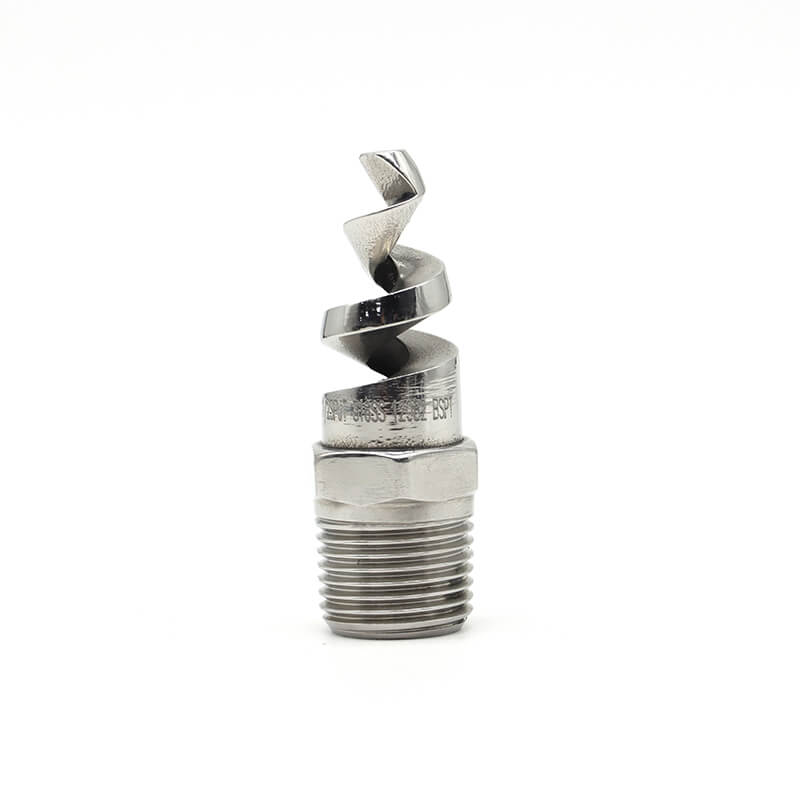
Step 3: Inspect the Orifice and Spiral Surface
After safe isolation and depressurization, inspect for:
- Loose particles, fibers or foreign objects.
- Scale, crystals, dried slurry or biological deposits.
- Erosion, rounded edges or visible material loss.
- Bent, cracked or impact-damaged spiral surfaces.
- Thread damage or evidence of side loading.
Step 4: Clean Without Changing the Geometry
Use the site’s approved cleaning method and a cleaning medium compatible with the nozzle material and process residue. Flush loose material in the reverse direction where practical. Do not use a hard drill, wire or tool that can enlarge the orifice or scratch the spiral surface.
Do not select a chemical cleaner from a generic recommendation. Compatibility depends on the nozzle material, deposit chemistry, concentration, temperature and exposure time.
Step 5: Decide Whether to Reuse or Replace
| Condition | Recommended disposition |
|---|---|
| Loose removable deposit, no visible damage and flow returns to baseline | Reuse subject to the site’s maintenance procedure. |
| Persistent deposit that cannot be removed safely | Replace and investigate filtration, chemistry or flushing. |
| Orifice or spiral surface visibly worn or damaged | Replace; do not reshape by hand. |
| Thread damage, cracking or leakage after correct installation | Remove from service and replace. |
| Wrong model, material or thread for the duty | Correct the specification before reinstalling. |
Step 6: Reinstall and Verify the Spray
Confirm NPT or BSPT, male or female connection, thread condition, orientation and the approved sealing method. Keep pipe loads from acting on the nozzle. After returning the system to service under the approved procedure, verify pressure, leakage, flow and pattern.
A water test can confirm flow and visible coverage, but it may not reproduce the behavior of a process liquid with different density, viscosity, surface tension, temperature or solids.
Preventive Maintenance Plan
- Establish baseline pressure, flow and spray observations for each duty.
- Inspect more frequently when solids, scale, abrasion or crystallization are present.
- Track filter pressure loss and cleaning frequency.
- Flush branches before deposits dry or settle during shutdown.
- Keep replacement nozzles identified by model, material and thread.
- Investigate repeated failures instead of shortening the replacement interval without finding the cause.
When to Review the Original Nozzle Selection
Recalculate the duty when the liquid, solids, pump, header, filter, nozzle count, process pressure, mounting position or required coverage changes. A nozzle that worked in the original system may be wrong after a process modification.
Review the spiral nozzle engineering guide for mechanism and applications. For broader blockage causes, see spray nozzle clogging causes and prevention.
Information to Send for Troubleshooting Support
- Nozzle model, material, size and connection.
- Application, liquid and solids information.
- Pressure and flow before and after the problem appeared.
- Installation drawing, photos and safe spray video.
- Filter, flushing and maintenance history.
- Description of the failure and how many nozzles are affected.
Request a spiral nozzle troubleshooting review
Jeltecn is a registered brand of Melinco Precision Technology Co., Ltd. Site maintenance and safety procedures control all inspection and service work.