

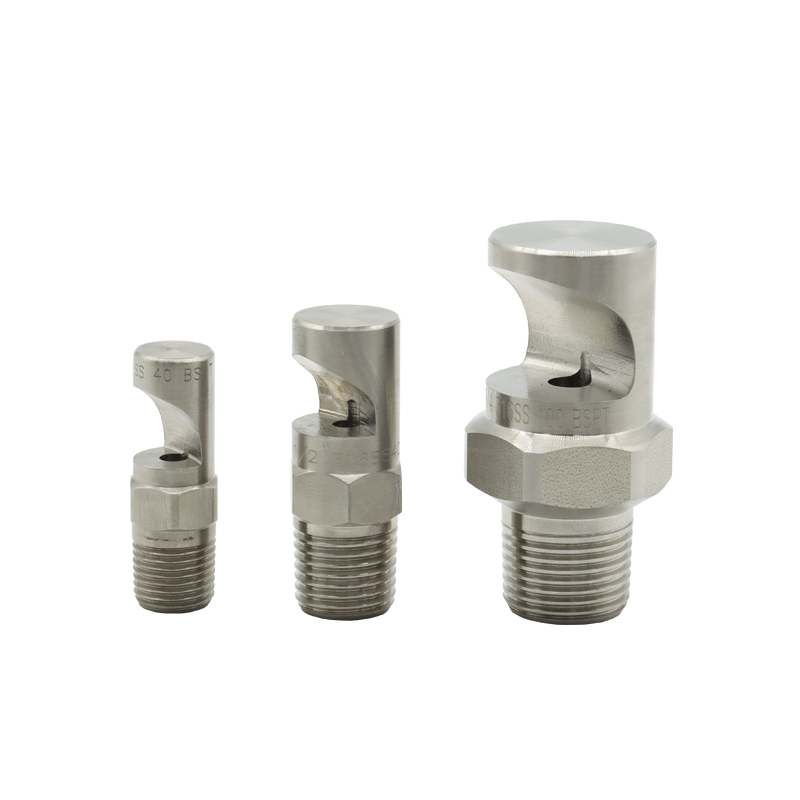

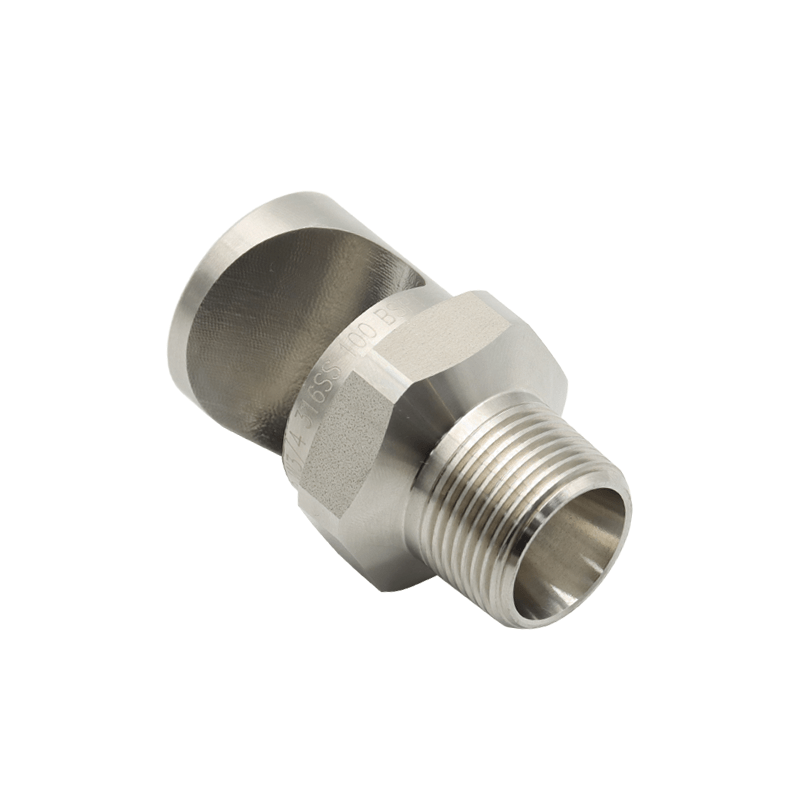



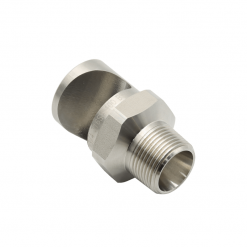
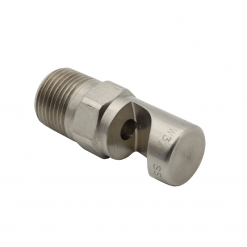
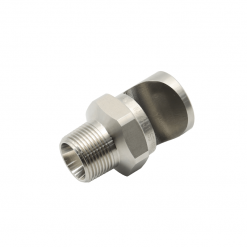
wide angle flat fan spray nozzles produce a broad, line-shaped pattern for processes that need large transverse coverage from a short distance. They are commonly evaluated for washing, cooling, rinsing, coating and surface treatment where nozzle count or installation height is constrained.
Wide Angle Flat Fan Spray Nozzles for Broad Coverage
A wide flat pattern can reduce the number of spray points, but pattern uniformity still depends on angle, distance, overlap and operating pressure. Edge taper is normal in many flat-fan patterns, so adjacent nozzles should be arranged with controlled overlap. The final layout should be checked across the full operating range.
Typical Applications
Wide angle flat fan spray nozzles are chosen for:
- Conveyor and belt washing with limited mounting height
- Sheet, web and strip cooling across a wide transverse zone
- Rinsing and pretreatment before coating or finishing
- Chemical application and lubrication requiring a line pattern
- Dust control along chutes, screens and transfer equipment
Key Selection Criteria
Correct nozzle selection depends on the complete operating envelope, not flow rate alone. Confirm the required coverage, droplet or atomization target, liquid properties, available pressure, duty cycle, installation space and allowable maintenance interval before specifying a model.
| Selection factor | Engineering question |
|---|---|
| Required spray width | Calculate target width at the actual nozzle-to-surface distance. |
| Spray angle | Select an angle that provides coverage without striking guards or adjacent equipment. |
| Flow and impact | Balance cleaning force or heat-transfer need against liquid consumption. |
| Overlap and spacing | Account for edge taper, header alignment and pressure variation. |
| Liquid properties | Confirm viscosity, solids, temperature and chemical compatibility. |
| Mounting orientation | Control nozzle rotation so all fan patterns align consistently. |
Performance and System Integration
Header design strongly influences uniformity. Use adequate pipe diameter, minimize unequal branch losses and measure pressure near the most remote nozzles. Staggering may reduce interference where multiple wide patterns overlap. For moving surfaces, combine traverse speed and spray width with the required application rate.
Final performance should be verified under actual process conditions. Pump pulsation, pressure loss through filters and valves, fluid temperature, viscosity, suspended solids, nozzle spacing and target distance can all change the delivered pattern. For multi-nozzle headers, balance branch losses and provide pressure measurement near the spray points.
Materials, Filtration and Maintenance
Fan-orifice wear can increase flow and change distribution before failure is obvious. Record baseline flow and pattern after commissioning, then compare during inspections. Use strainers appropriate to the passage size and choose a material that resists both the sprayed chemical and abrasive wear.
- Use filtration matched to the smallest internal passage and the contamination load.
- Inspect pattern quality, flow consistency, seals and connections on a documented schedule.
- Clean with a compatible non-damaging method; avoid tools that can enlarge the orifice.
- Replace worn components when flow, coverage or shutoff performance moves outside the process tolerance.
Information to Include with Your RFQ
For an application-specific recommendation, provide the liquid name and concentration, temperature, viscosity, target flow per nozzle, available liquid and air pressure where applicable, spray distance, required coverage, duty cycle, connection preference, material restrictions and site environment. Photos or a simple installation drawing help our engineers evaluate mounting and access.
Frequently Asked Questions
How is the coverage width determined?
Approximate width follows spray angle and target distance, but real coverage is influenced by gravity, pressure, liquid properties and pattern definition. Validate the layout with an actual spray test.
How much overlap is required?
Overlap depends on the distribution profile and uniformity target. Do not use a single universal percentage; review the pattern data and test the proposed spacing.
Can Jeltecn help validate the selection?
Yes. Jeltecn can review your operating data, installation constraints and spray objective before quotation. Sample or application testing may be recommended when liquid properties or coverage requirements are critical.
Request an Engineering Recommendation
Send your process data to Jeltecn for a practical wide angle flat fan spray nozzles recommendation. We will help compare configuration, material, connection and operating requirements for your application.
Contact Jeltecn for a quotation or explore our CC series flat fan spray nozzle and full industrial spray nozzle range, applications and industry solutions.


