
PCB Cleaning Flat Fan Nozzles provide uniform spray coverage for electronics cleaning when pressure, spacing, filtration and chemical-compatible materials are correctly selected.
Printed circuit board and electronics assembly lines depend on precise, repeatable spray coverage for flux removal, post-reflow cleaning, and surface preparation before conformal coating. Too little coverage leaves flux residue and contamination that cause field failures; too much liquid or pressure can damage fine-pitch components or leave streaking. Flat fan nozzles are widely used on these lines because their linear, edge-to-edge pattern matches the way boards travel through a conveyorized cleaning tunnel far better than a round cone pattern does.
Quick answer: Flat fan nozzles are used in PCB and electronics cleaning lines to deliver a uniform, low-turbulence spray curtain across the width of a conveyor, rinsing flux residue and particulate from board surfaces without the localized high-impact zones that a full cone or solid stream nozzle would create.
Why PCB Cleaning Flat Fan Nozzles Depend on Spray Pattern
Boards move through a cleaning or rinsing tunnel on a flat conveyor, typically at a fixed height and speed. A flat fan spray oriented across the direction of travel creates a continuous curtain of liquid that every point on the board passes through evenly, which is critical for two reasons: uniform flux and residue removal across the whole board (including under low-profile components), and consistent, gentle impact force so delicate surface-mount components and fine solder joints are not disturbed. Full cone or hollow cone nozzles, by contrast, concentrate more liquid at the center of their pattern and less at the edges, which can leave streaks or under-cleaned zones between overlapping cones unless spacing is very tightly controlled.

Where Flat Fan Nozzles Are Used on Electronics Lines
PCB cleaning flat fan nozzles show up at several distinct points along the line, each with different spray requirements. For general background on this process, see this overview of printed circuit board manufacturing.
Common placements include post-reflow flux removal tunnels, where flat fan headers rinse rosin or no-clean flux residues before boards move to drying; final rinse stages after aqueous cleaning, where flat fan nozzles apply deionized water in a controlled curtain to avoid mineral spotting; pre-coating surface preparation, where boards are rinsed and dried before conformal coating is applied so the coating bonds to a clean surface; and stencil and misprint cleaning stations, where narrow-angle flat fan tips target solder paste residue on stencils between print cycles.
Choosing Spray Angle and Orifice Size for Electronics Applications
Two variables matter most when specifying a nozzle for a cleaning tunnel: coverage width and droplet energy. Wider spray angles reduce the number of nozzles needed to cover a given conveyor width but spread flow over a larger area, lowering local impact; narrower angles concentrate more force into a smaller strip, which suits targeted flux or stencil cleaning but requires more nozzles or nozzle passes to cover a full board width. Because electronics cleaning generally calls for gentle, evenly distributed impact rather than aggressive stripping, low-to-moderate pressure with a wider flat fan angle is typically preferred over the high-pressure narrow jets used in heavier industrial descaling.
| Product | Typical Spray Angle | Electronics Line Fit |
|---|---|---|
| Narrow Angle Flat Fan Nozzle | ~15°–25° | Targeted stencil and misprint cleaning |
| Standard Flat Fan Spray Nozzle | ~40°–65° | Post-reflow flux removal and general rinse tunnels |
| Wide-Angle Flat Fan Spray Nozzle | ~80°–110° | Full-width final rinse curtains with fewer nozzles per header |
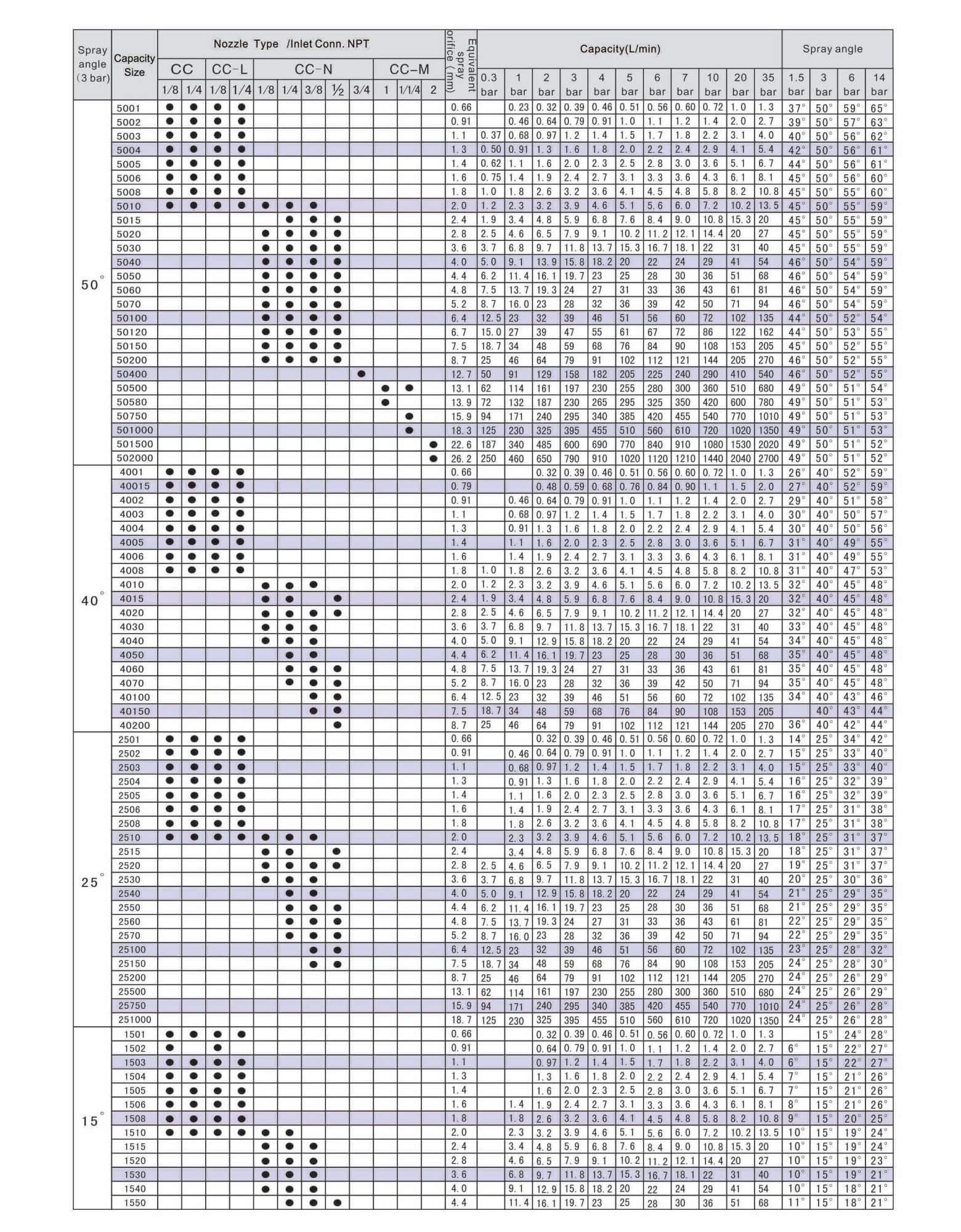
For a full breakdown of orifice diameter, pressure, and flow-rate data across our range, see the Flat Fan Spray Nozzle selection guide, and for a side-by-side look at when a cone pattern may still be preferable, read our Flat Fan vs Full Cone Nozzle comparison.
Material and Cleanliness Considerations
Electronics cleaning water quality directly affects yield, so nozzle material matters as much as spray pattern. 316 stainless steel bodies resist the corrosion and metal ion leaching that can occur with brass in deionized water systems, which is important because trace metallic contamination on a board surface can cause long-term reliability issues. Fine orifice sizes used for precision rinsing are also more sensitive to scale and biofilm buildup in water lines, making it worth reviewing our notes on preventing nozzle clogging as part of your water treatment and filtration plan.
Specifying a Nozzle for Your Cleaning Tunnel
Choosing the right PCB cleaning flat fan nozzles up front avoids rework once the tunnel is installed.
To get a fast, accurate recommendation, provide your conveyor width and board clearance height, target flow rate and available pump pressure, water type (DI, RO, or treated mains), material preference (stainless steel or brass), and thread or mounting connection for your existing header. Our engineering team can then recommend spray angle, orifice size, and nozzle spacing to achieve full, even coverage with minimal nozzle count.
Frequently Asked Questions
Can flat fan nozzles be used with deionized water?
Yes. Stainless steel flat fan nozzles are compatible with DI water systems; brass is generally avoided in DI service due to potential ion leaching.
How many nozzles do I need for a typical PCB rinse tunnel?
It depends on conveyor width and chosen spray angle; overlapping wide-angle flat fan patterns at the correct mounting height usually minimizes nozzle count while maintaining even coverage. Share your tunnel dimensions and we can calculate spacing.
Is a flat fan or a fine mist nozzle better for delicate components?
Flat fan nozzles at moderate pressure provide even, low-turbulence coverage suited to most rinsing needs; for extremely delicate or low-clearance assemblies, a lower-pressure wide-angle flat fan or an air-atomizing mist option may be preferable. Contact us to discuss your specific board layout.
Get an Engineering Recommendation
Share your line specifications with our team and we’ll help you select the right flat fan nozzle, spray angle, and layout for reliable, high-yield cleaning. Contact us for a free application review, or view the full Flat Fan Nozzle range.