



Description
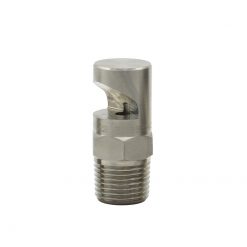
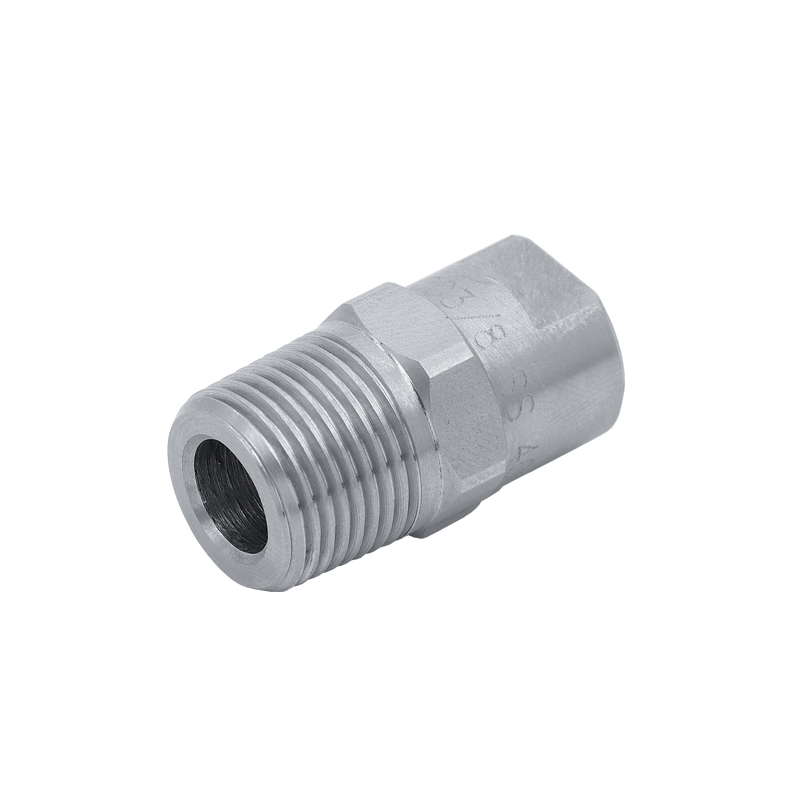
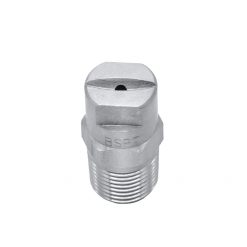
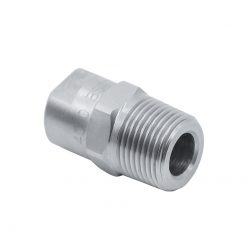
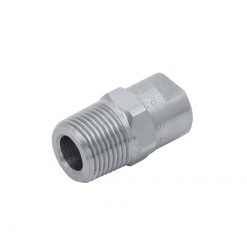
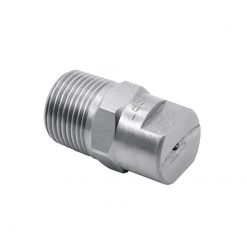
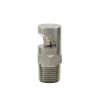
Flat Fan Spray nozzles include wide-angle flat fan spray nozzles, narrow-angle nozzles, combined fan nozzles, single fan nozzles, self-cleaning fan nozzles, flat fan nozzles, clip-on fan nozzles, quick-release fan nozzles.
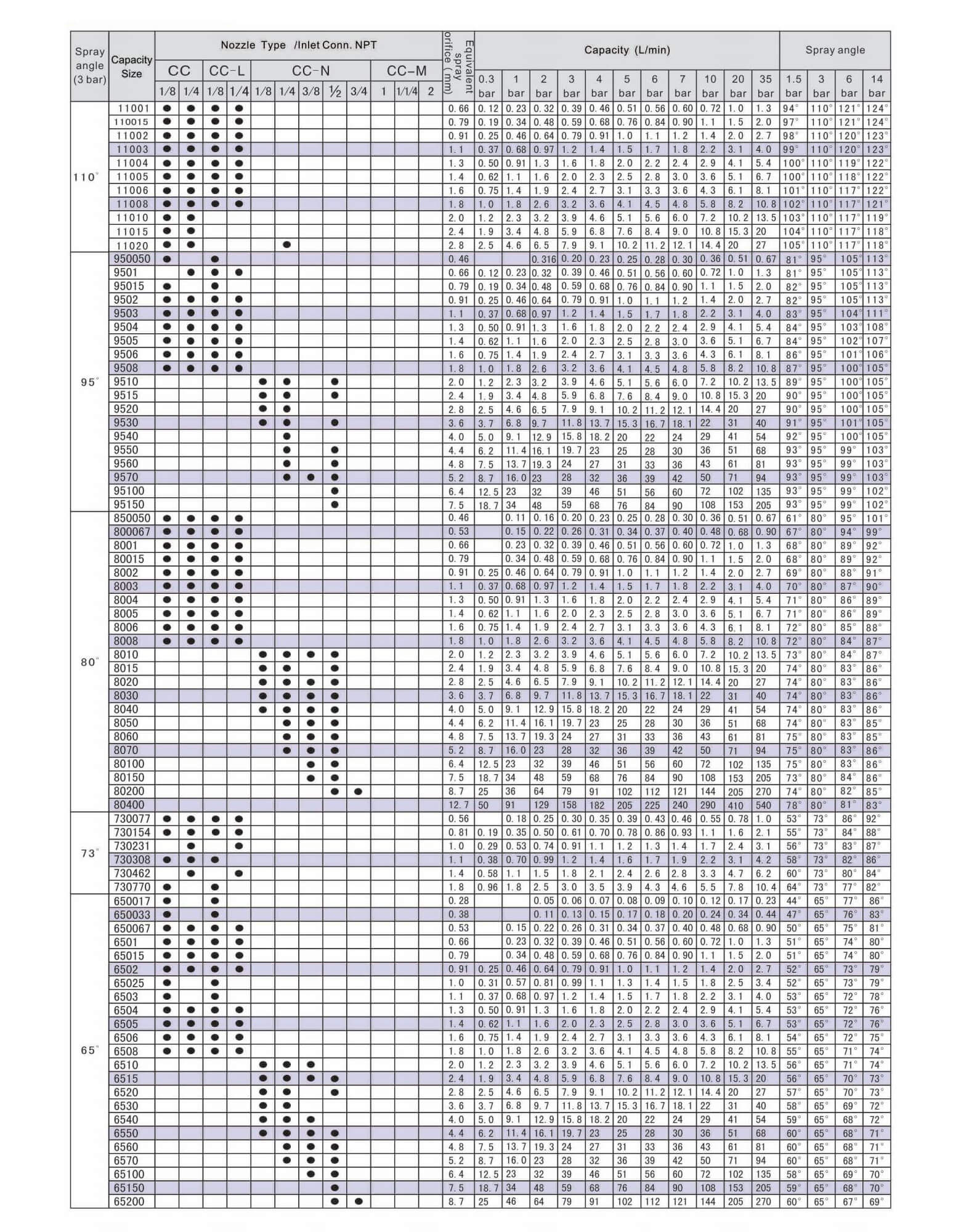
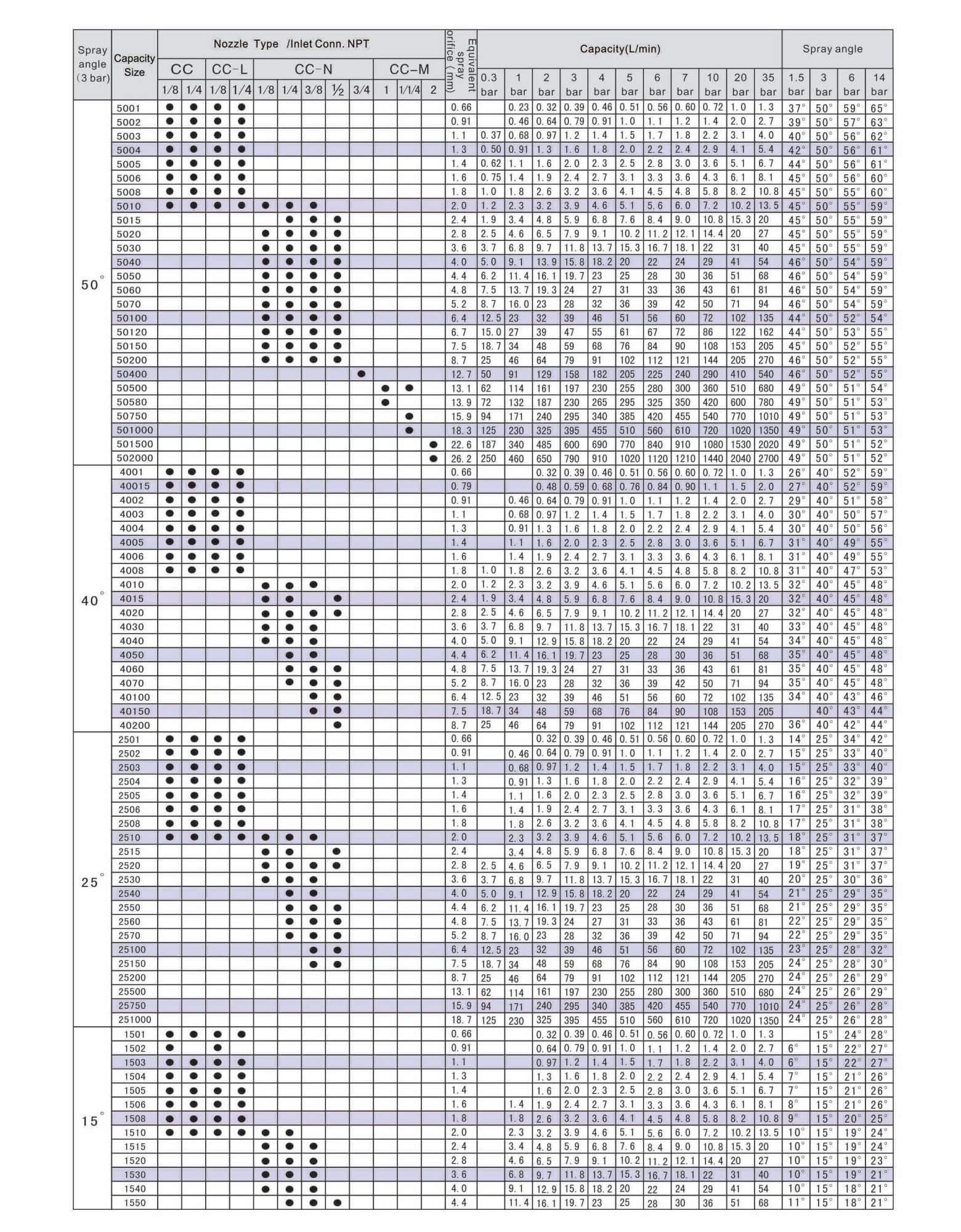
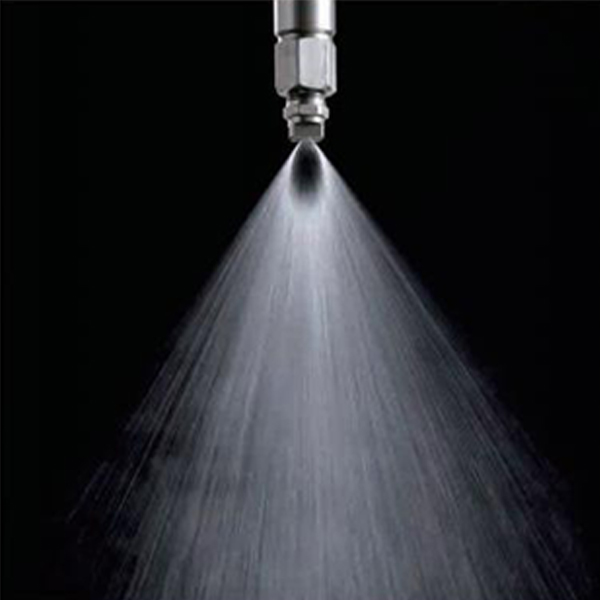
Flat Fan Spray Nozzles have liquid column flow or fan-shaped spray that can produce high impact force, and the spray angle is 0°-120°. This nozzle produces a uniform spray distribution. Droplet size is small to medium. When several nozzles are required to produce overlapping sprays, the characteristic tapered spray edge provides even spray coverage.
The spray angle of the flat fan spray nozzles is available at any angle from 0° to 120°. The smaller the angle, the greater the impact force and the stronger the cleaning force. The larger the angle, the wider the coverage area, and the relative weakening of the impact force. Different types of fan nozzles use different flow rates at different pressures. Customers who require cleaning strength as the main purpose can use a fan nozzle with a moderate angle of about 50-60 degrees, and customers with humidification as the main purpose can choose a nozzle with a degree of 90-110 degrees. The larger the angle, the better the atomization effect.
Advantages
- Professional industry spray nozzle with over 15 years of experience.
- Complete QC system and strong after-sales concept.
- 3 R&D Engineers with over 10 years of experience.
- ISO9001:2015/SGS/CE certification.
- Third-party audit.
- Fast delivery.
- Accept OEM/ODM
Specs
| Brand | Jeltecn |
| Nozzle Type | CC |
| Thread Size | 1/8″, 1/4”, 3/8”, 1/2”, 3/4”, 1”, 1-1/4”, 2”, |
| Spray Angle | 0°-120° |
| Spray Pattern | Fan-shaped |
| Thread Type | BSPT, NPT, Male, Female |
| Orifice Dia. (MM) | 0.66-8.7 |
| Water Pressure | 0.3bar-10bar |
| Capacity(L/H) | 0.93L-1230L |
| Material | Stainless Steel/Brass |
| Packaging | Carton |
| Certificates | ISO9001/SGS/CE |
| Payment Terms | T/T, Western Union, Paypal |
Application
1. Metal processing cleaning, spray coating, spray cooling, oil stain removal, electroplating line washing, agricultural product cleaning;
2. Applications such as cleaning, spraying, and cooling in food, steel, paper, and other industries;
3. Processes such as cleaning, developing, shadowing, and etching of printed circuit boards, rain test, jet cooling, semiconductor cleaning, color tube glass bulb cleaning, LCD glass cutting, and cleaning
Performance Date
Jeltecn Factory

Certification

Cooperative Customers
Video
How to Select Flat Fan Spray Nozzles
flat fan spray nozzles forms a flat sheet of liquid that can be used singly or overlapped on a header for controlled linear coverage. This page should be evaluated as an engineered component: final performance depends on the liquid, pressure at the nozzle, installed geometry and the selected configuration.
Technical selection criteria
- Process fluid: identify composition, temperature, specific gravity, viscosity, suspended solids and any corrosion or erosion risk.
- Required duty: state flow per nozzle, minimum and maximum inlet pressure, operating cycle and acceptable turndown.
- Spray result: define pattern, angle, coverage width or diameter, stand-off distance, droplet requirement and allowable overspray.
- Installation: confirm thread standard, connection size, orientation, header spacing, available clearance and access for inspection.
- Materials and maintenance: match body, insert, seals and accessories to the fluid and environment; include filtration and cleaning requirements.
Where this nozzle type fits
Typical evaluation areas include cleaning, rinsing, coating, cooling, surface treatment and conveyor spraying. When comparing flat fan spray nozzles with fan jet nozzle, flat spray tip, tapered-edge spray nozzle, select the pattern and construction that solve the actual process duty. A wider angle does not automatically mean better atomization, and a higher pressure does not automatically deliver the best coverage.
Engineering limits and installation checks
Published flow and spray data are normally based on defined test liquids and conditions. Viscosity, specific gravity, pressure loss, solids, temperature, nozzle wear, pulsation and nearby airflow can change field performance. Confirm the installed pressure at the nozzle—not only pump discharge pressure—and verify overlap or target coverage before finalizing a production header.
Information to include with an RFQ
Provide liquid properties, target flow, pressure range, spray angle or coverage, distance to target, material, connection, quantity, duty cycle and installation drawings. Jeltecn can use these inputs to compare the requested configuration with related spray nozzle application guidance and the complete industrial spray nozzle range.
Frequently asked questions
What determines the flow of flat fan spray nozzles?
Flow depends primarily on the selected orifice and pressure differential, then must be corrected for liquid density, viscosity and the actual piping losses.
How should this nozzle be validated before production use?
Confirm the exact model and material, review the performance table, test coverage under representative conditions and document inspection or replacement criteria.
Flat Fan Spray Nozzles: Engineering Decision Guide
Flat fan spray nozzles are the primary choice when a process needs a defined line-shaped pattern, controlled overlap and predictable coverage across a moving or stationary surface. Selection must combine spray angle, target distance, flow, impact, edge taper and header layout; choosing by connection size alone often produces striping or wasted liquid.
When this nozzle is the right fit
This product is a strong candidate when its spray mechanism matches the process objective and the site can maintain the required utilities, liquid quality, installation geometry and inspection routine. Use the following decision points to qualify the application before selecting a connection or ordering quantity.
| Decision variable | What to confirm |
|---|---|
| Coverage width | Set the real nozzle-to-target distance and usable pattern width, including edge quality rather than theoretical geometry alone. |
| Distribution profile | Tapered patterns suit overlapping headers; more even profiles may suit single-nozzle treatment or defined lanes. |
| Impact requirement | Cleaning and descaling need momentum at the target, while coating and cooling may prioritize distribution and liquid economy. |
| Operating range | Confirm minimum, normal and maximum pressure at every nozzle after filter, valve and header losses. |
| Header layout | Define nozzle spacing, rotation, stand-off distance and moving-surface direction to control overlap. |
| Wear and chemistry | Select body and orifice materials for corrosion, temperature and abrasion, then plan flow-based wear checks. |
How it compares with alternative spray technologies
Use flat fan nozzles for line coverage, surface impact and overlapping manifolds. Choose full cone nozzles when a filled circular or square area needs distributed volume, spiral nozzles when open passages and broad cone coverage are important, and atomizing nozzles when droplet fineness is the dominant requirement. The correct spray pattern follows the target geometry and process objective.
Common performance problems and diagnostic checks
| Observed problem | What to investigate first |
|---|---|
| Striping between adjacent sprays | Verify nozzle rotation, spacing, edge taper, header straightness and equal pressure. |
| Narrower or wider pattern than expected | Check actual pressure, target distance, liquid viscosity and obstruction near the spray. |
| Flow increase over time | Inspect for abrasive wear; compare measured flow at a controlled pressure with the commissioning baseline. |
| Weak cleaning impact | Review pressure at the nozzle, stand-off distance, angle of attack and the tradeoff between flow and velocity. |
Recommended validation before production release
For critical coating, cooling or washing, perform a patternation or catch test across the target width. Measure distribution at the real height and pressure, then assess overlap under minimum and maximum operating conditions. For moving products, relate liquid distribution to line speed and required application rate.
Core-product RFQ checklist
Send the liquid name and concentration, temperature, viscosity, solids or water-quality information, target flow per nozzle, available pressure, air data where applicable, spray distance, coverage geometry, duty cycle, connection preference, material restrictions, installation drawing and photos of the spray zone. State the process result you need and the failure mode you want to avoid. Jeltecn can then review the application and identify points requiring test confirmation.
Related technical routes: Spiral spray nozzles · Applications · all spray nozzle products · request an engineering quotation.