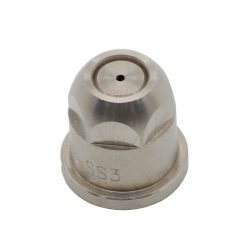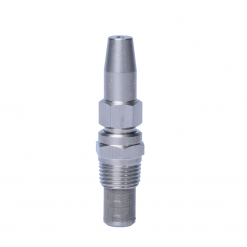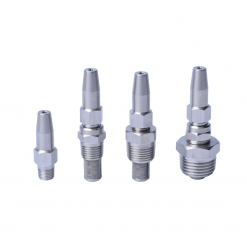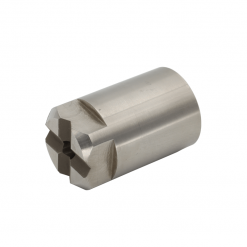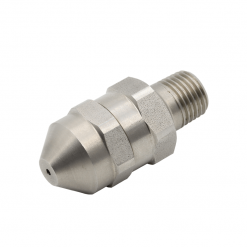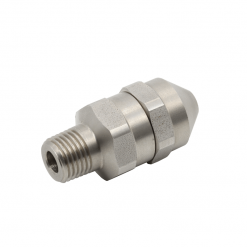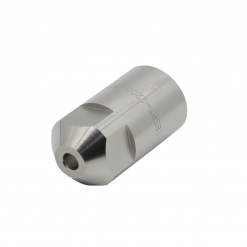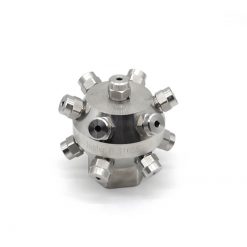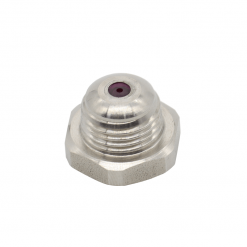
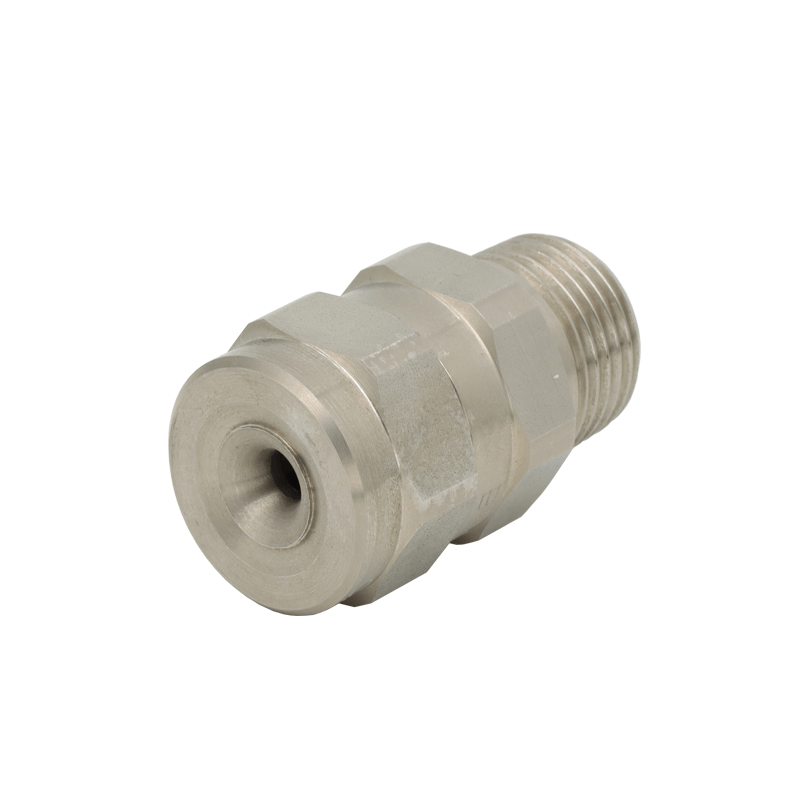
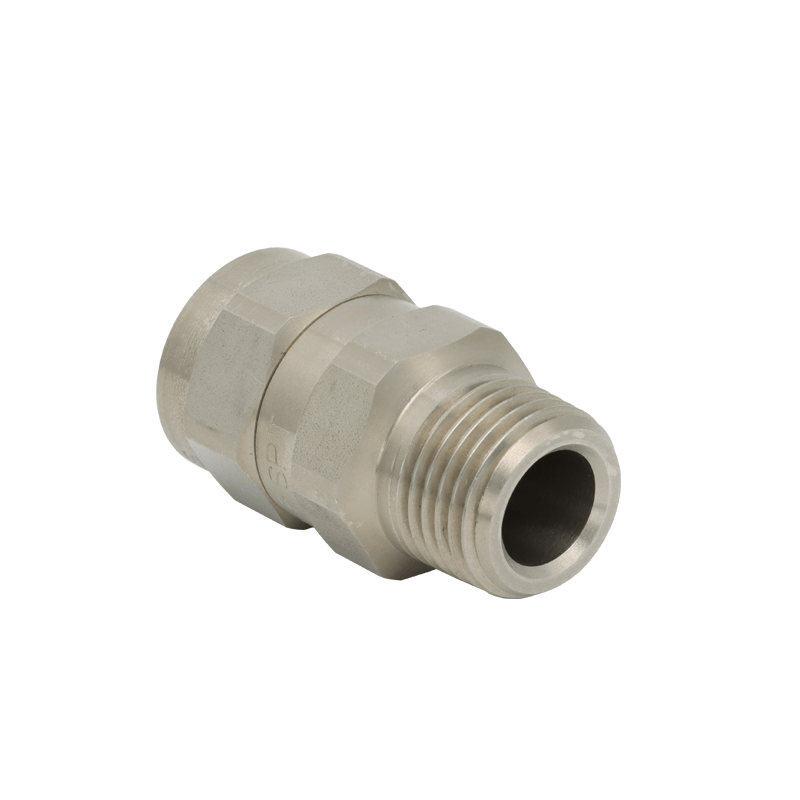


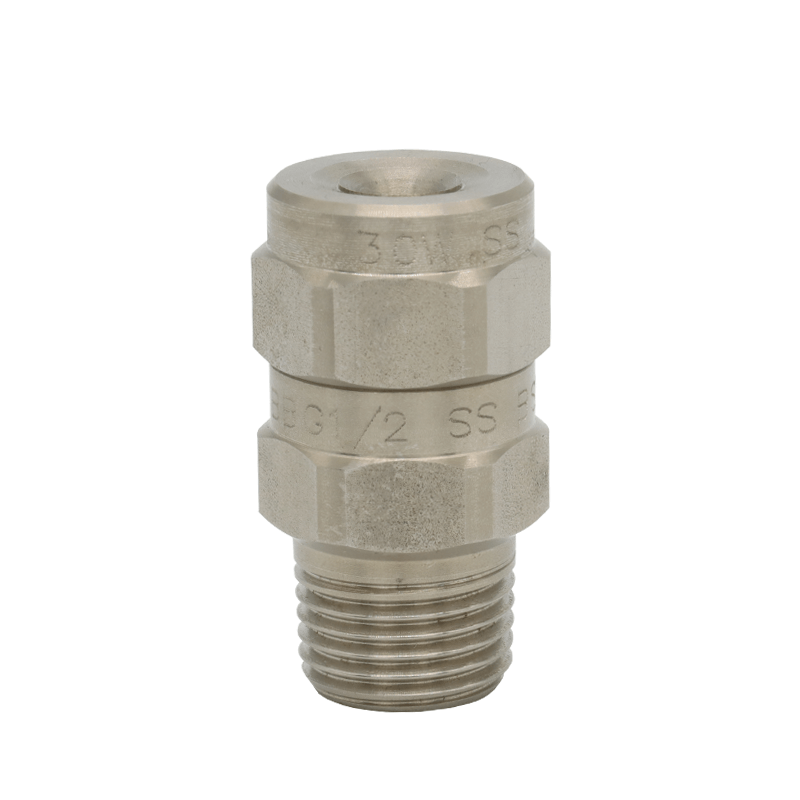

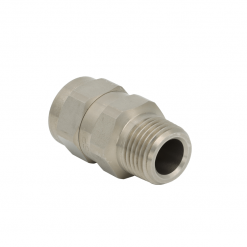
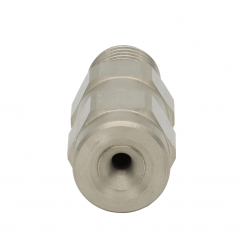
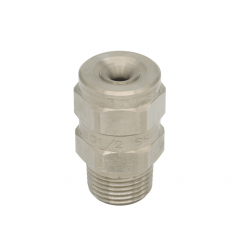
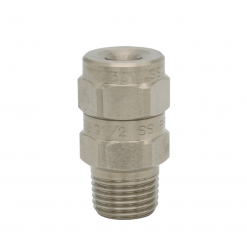
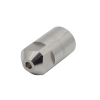
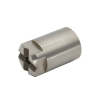
Jeltecn wide angle full cone spray nozzles provide a filled spray pattern for broad coverage at a relatively short installation distance. They are used as a starting point for vessel washing, cooling, quenching, dust control and process-liquid distribution when a wider footprint is required.
Wide-Angle Full Cone Nozzle Data
| Series | BB wide-angle full cone |
|---|---|
| Published spray-angle range | 40°–115°, depending on model and operating conditions |
| Water pressure range | 0.3–10 bar |
| Orifice range | 1.6–31.8 mm, depending on size |
| Capacity range | 0.93–1230 L/h for water across the listed model range |
| Material options | 303 stainless steel, 316 stainless steel or brass |
| Connection | NPT or BSPT; male or female options by selected size |
| Connection sizes | 1/8 in. through 2-1/2 in. within the published range |
These are family ranges. Confirm the exact flow, pressure, angle, orifice, material and connection from the selected model row. Published capacity data is for water.
When a Wide-Angle Full Cone Is a Good Starting Point
- The available mounting height is limited and a broad footprint is needed.
- A stationary target needs liquid throughout the circular impact area.
- A header or grid must cover a large area with controlled overlap.
- The operating pressure is stable enough to maintain the selected pattern.
Selection Checks
- Define the required flow per nozzle.
- Measure pressure at the planned nozzle position.
- Calculate preliminary coverage from angle and distance.
- Check clearance around the wide spray envelope.
- Review the liquid composition, temperature and solids.
- Select material and thread standard.
- Verify the installed coverage before production approval.
A wider angle does not automatically mean fewer nozzles. Usable coverage depends on target distance, pattern edge, overlap and header pressure balance. Compare the wide-angle and narrow-angle full cone selection guide.
Coverage and Header Layout
Use spray angle only for a preliminary footprint calculation. Gravity, pressure, flow, liquid properties and orientation can change the result. Where distribution matters, follow the full cone spray distribution test.
Liquid, Material and Maintenance
Send the liquid composition, temperature, viscosity, specific gravity and suspended solids before final material selection. Plan upstream filtration around the selected nozzle passage and actual liquid condition. Monitor pressure, flow and pattern shape during operation, and clean the orifice without damaging its geometry.
Typical Applications for the Wide Angle Full Cone Spray Nozzle
Wide angle full cone spray nozzles are frequently selected where mounting height is restricted but a broad, filled footprint is still required. Common duties include tank and vessel washdown, cooling tower distribution decks, dust suppression over stockpiles, and fire-water or deluge systems where quick, even wetting of a large area matters more than throw distance.
Frequently Asked Questions
Do wide angle full cone spray nozzles use more water than narrow angle models? Not necessarily; flow is set primarily by the orifice and pressure, not the angle. Angle mainly changes the footprint shape at a given distance.
How is nozzle spacing determined on a header? Spacing depends on the spray angle, mounting height and required overlap; verify the layout with a distribution test rather than relying on the calculated footprint alone. Leave a margin for pressure drop across the header so end nozzles still deliver the intended pattern. For general spray pattern terminology, see this nozzle reference.
Request a Wide-Angle Nozzle Review
Provide target dimensions, nozzle-to-target distance, required total flow, number of nozzles, available pressure, liquid details, connection, material, quantity and destination. Jeltecn is a registered brand of Melinco Precision Technology Co., Ltd.
Send your wide-angle full cone nozzle requirements
Related: Full cone nozzle category | Full cone nozzle guide