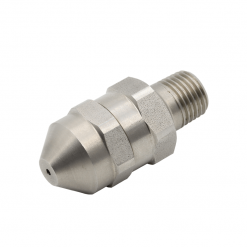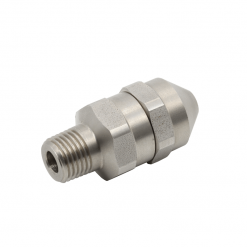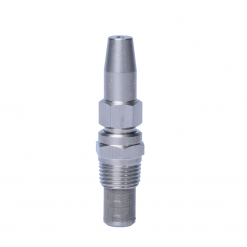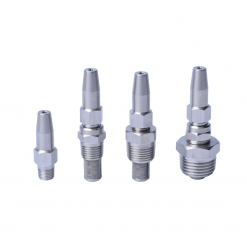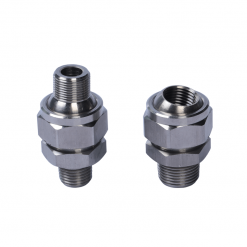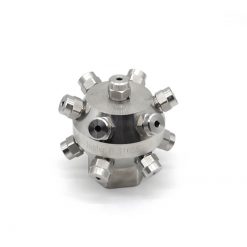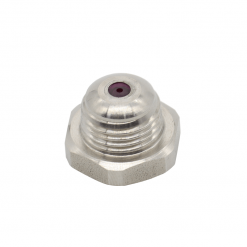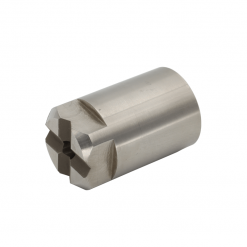


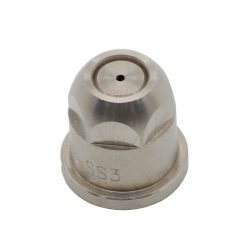
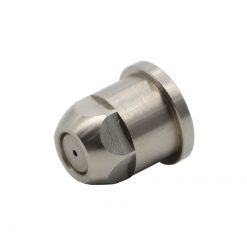
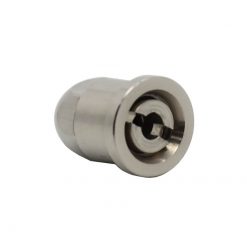
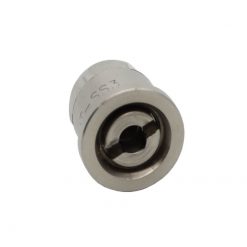
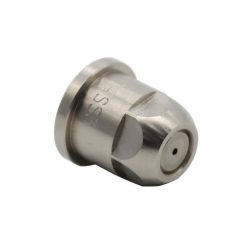
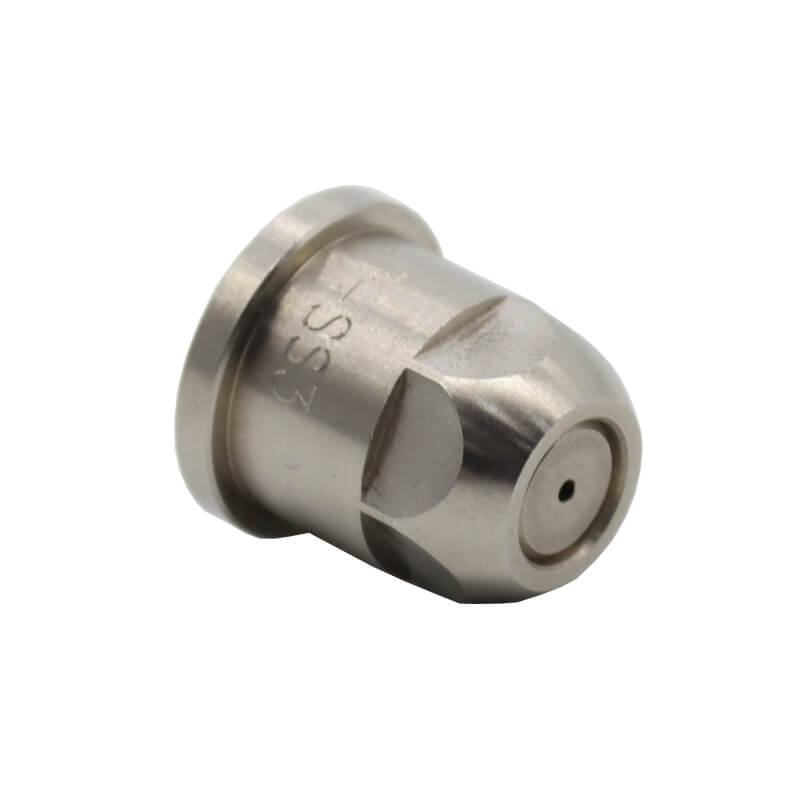
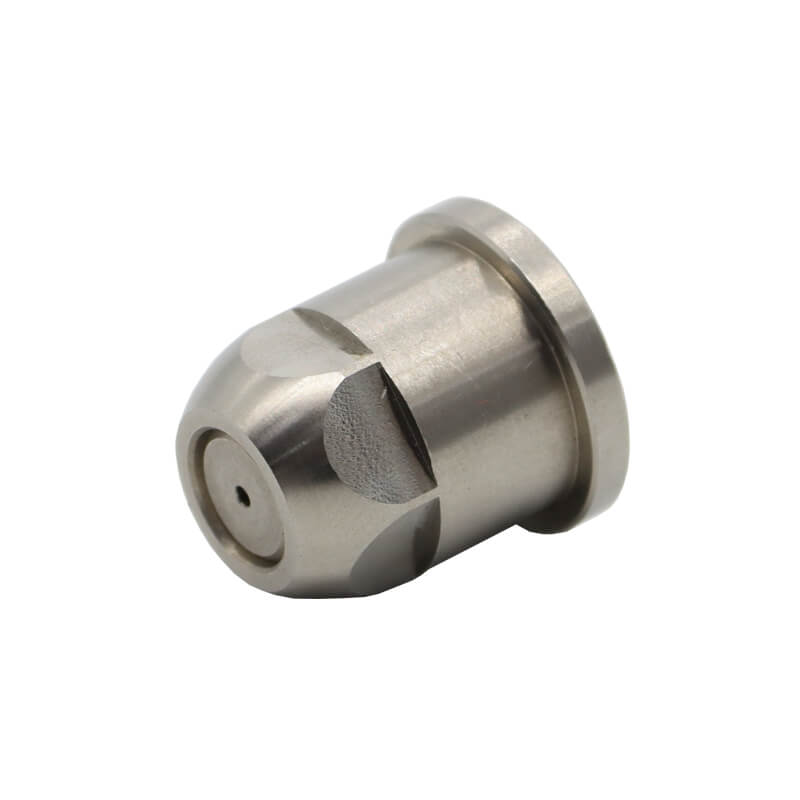
The Jeltecn paper industry solid stream nozzle delivers a dense, concentrated jet for wire and felt cleaning, edge trimming, shower systems and targeted deposit removal in paper and pulp mills.
Description
Jeltecn Solid Stream Spray Nozzle produces very dense jets due to optimized flow paths. Efficient jet flow can be obtained even without a flow stabilizer. This type of nozzle is mainly used for various cleaning, cutting, and other applications that require strong point impact.
The smooth liquid column can be called the “original jet” of nozzle technology. This includes low-pressure liquid column nozzles.
Basically, the liquid column shape does not need atomization, because the maximum impact force is achieved by the beam jet. The technology of the nozzle design is that it prevents the liquid column from dispersing, even at longer jets.
Advantages
- Professional industry spray nozzle with over 15 years of experience.
- Complete QC system and strong after-sales concept.
- 3 R&D Engineers with over 10 years of experience.
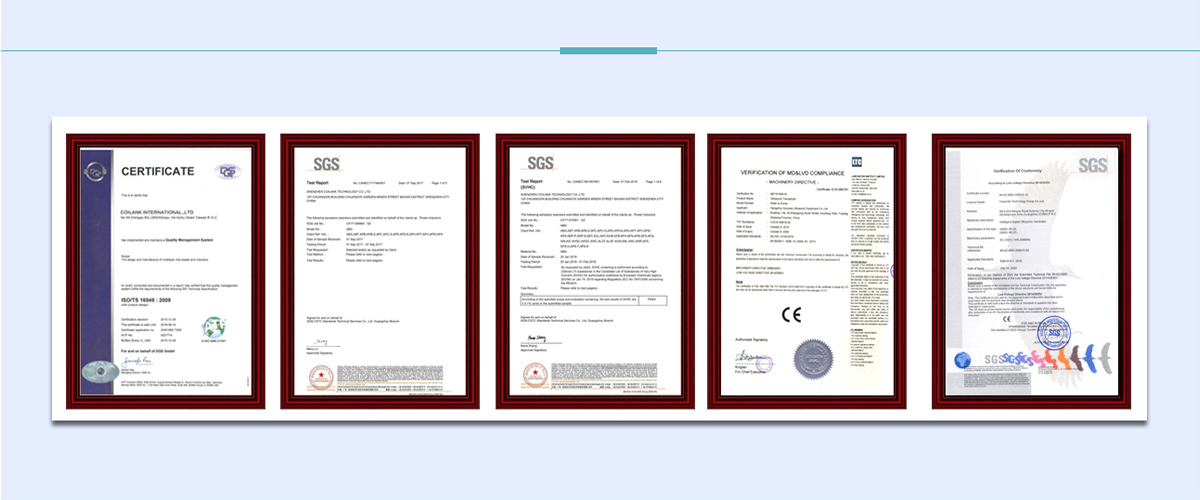
- ISO9001:2015/SGS/CE certification.
- Third-party audit.
- Fast delivery.
- Accept OEM/ODM
Specs
| Brand | Jeltecn |
| Nozzle Type | BB |
| Thread Size | 1/8″ 1/4” 3/8” 1/2” |
| Spray Angle | 0° |
| Spray Pattern | Full Cone |
| Thread Type | BSPT, NPT, Male |
| Orifice Dia. (MM) | 0.2-4.0 |
| Water Pressure | 0.7bar-20bar |
| Capacity(L/H) | 0.01L-54L |
| Material | Stainless Steel/Brass |
| Packaging | Carton |
| Certificates | ISO9001/SGS/CE |
| Payment Terms | T/T, Western Union, Paypal |
Application
Cleaning: Bottles, Containers, Filters, Industrial Equipment
Cooling: Steel plates
Water cooling: Cooling of primary metals and other material, Conveyor Belt Cooling, Metal Parts, Machines
Performance Date
Solid Stream Spray Nozzle

Image



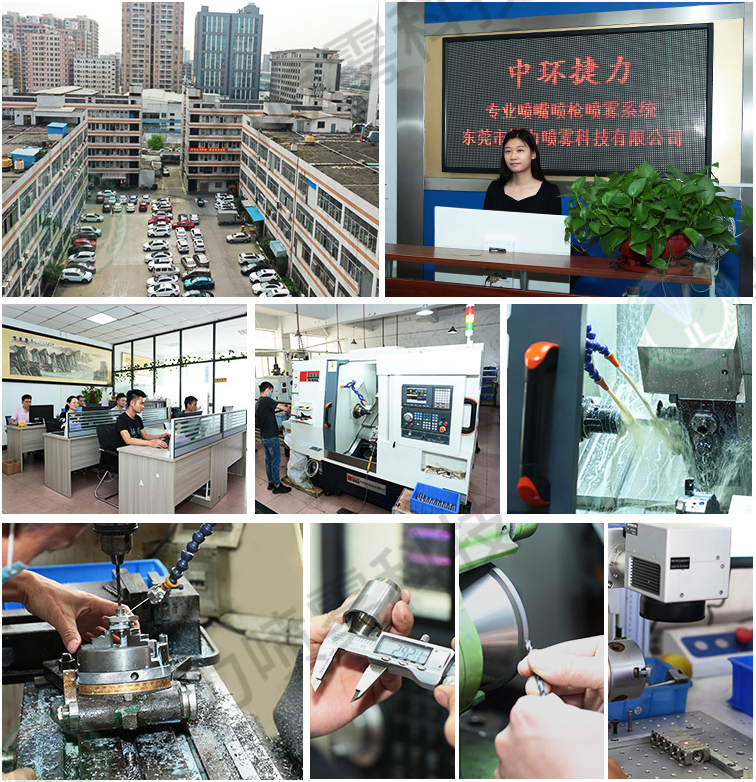
Jeltecn Factory
Certification
Cooperative Customers
Video
How to Select Paper Industry Solid Stream Nozzle
paper industry solid stream nozzle creates a coherent jet for precise cleaning or trimming positions on paper and pulp equipment. This page should be evaluated as an engineered component: final performance depends on the liquid, pressure at the nozzle, installed geometry and the selected configuration.
Technical selection criteria
- Process fluid: identify composition, temperature, specific gravity, viscosity, suspended solids and any corrosion or erosion risk.
- Required duty: state flow per nozzle, minimum and maximum inlet pressure, operating cycle and acceptable turndown.
- Spray result: define pattern, angle, coverage width or diameter, stand-off distance, droplet requirement and allowable overspray.
- Installation: confirm thread standard, connection size, orientation, header spacing, available clearance and access for inspection.
- Materials and maintenance: match body, insert, seals and accessories to the fluid and environment; include filtration and cleaning requirements.
Where this nozzle type fits
Typical evaluation areas include wire and felt cleaning, edge trimming, shower systems and targeted deposit removal. When comparing paper industry solid stream nozzle with paper machine needle jet nozzle, trim squirt nozzle, high-impact water jet, select the pattern and construction that solve the actual process duty. A wider angle does not automatically mean better atomization, and a higher pressure does not automatically deliver the best coverage.
Engineering limits and installation checks
Published flow and spray data are normally based on defined test liquids and conditions. Viscosity, specific gravity, pressure loss, solids, temperature, nozzle wear, pulsation and nearby airflow can change field performance. Confirm the installed pressure at the nozzle—not only pump discharge pressure—and verify overlap or target coverage before finalizing a production header.
Information to include with an RFQ
Provide liquid properties, target flow, pressure range, spray angle or coverage, distance to target, material, connection, quantity, duty cycle and installation drawings. Jeltecn can use these inputs to compare the requested configuration with related spray nozzle application guidance and the complete industrial spray nozzle range.
Frequently asked questions
What determines the flow of paper industry solid stream nozzle?
Flow depends primarily on the selected orifice and pressure differential, then must be corrected for liquid density, viscosity and the actual piping losses.
How should this nozzle be validated before production use?
Confirm the exact model and material, review the performance table, test coverage under representative conditions and document inspection or replacement criteria.