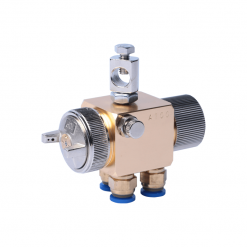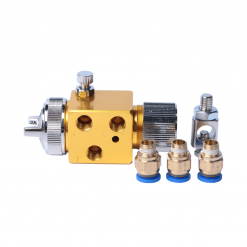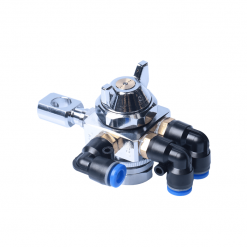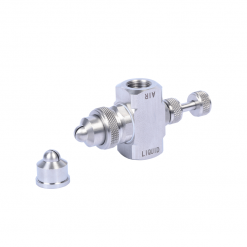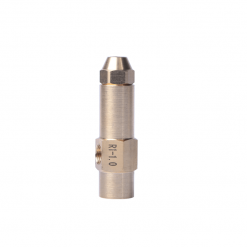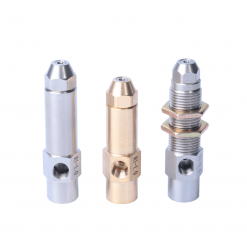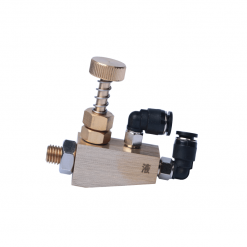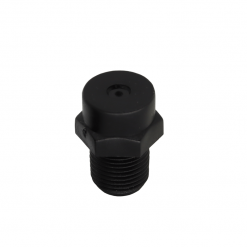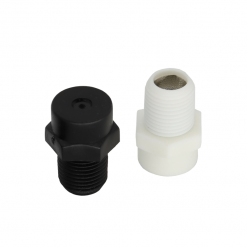
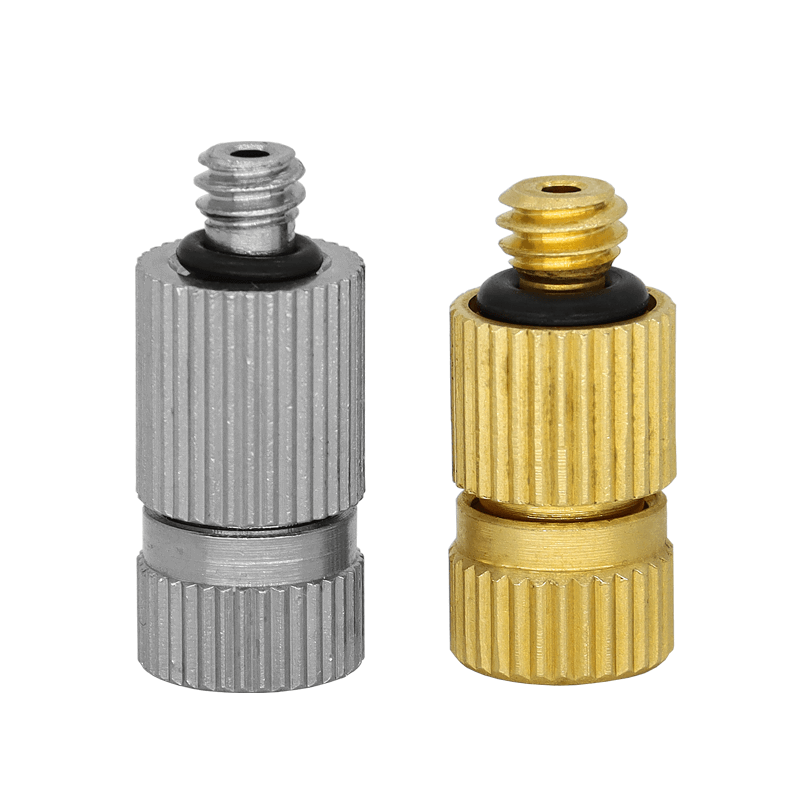
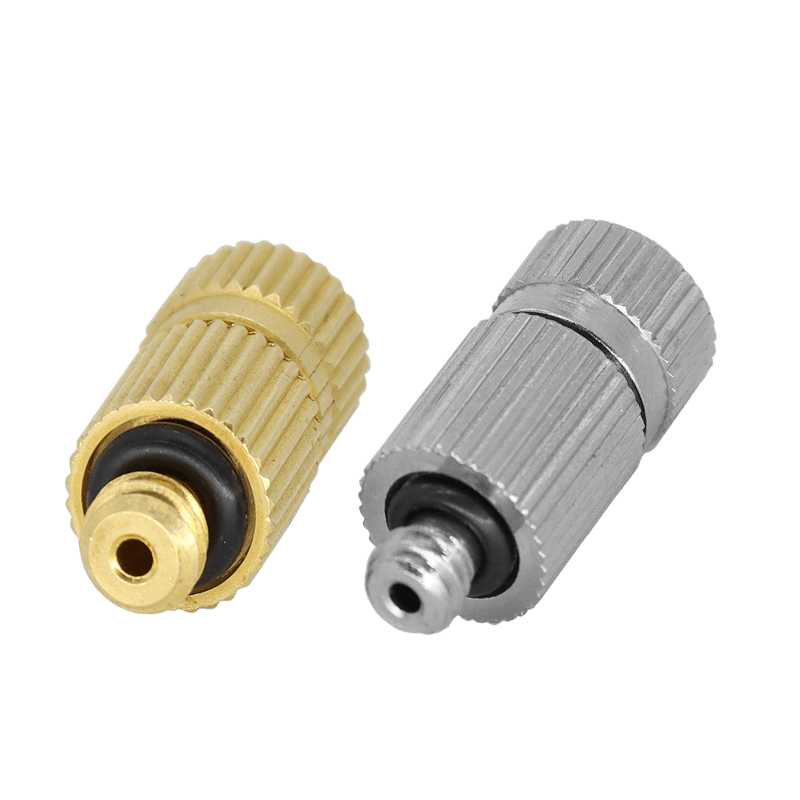

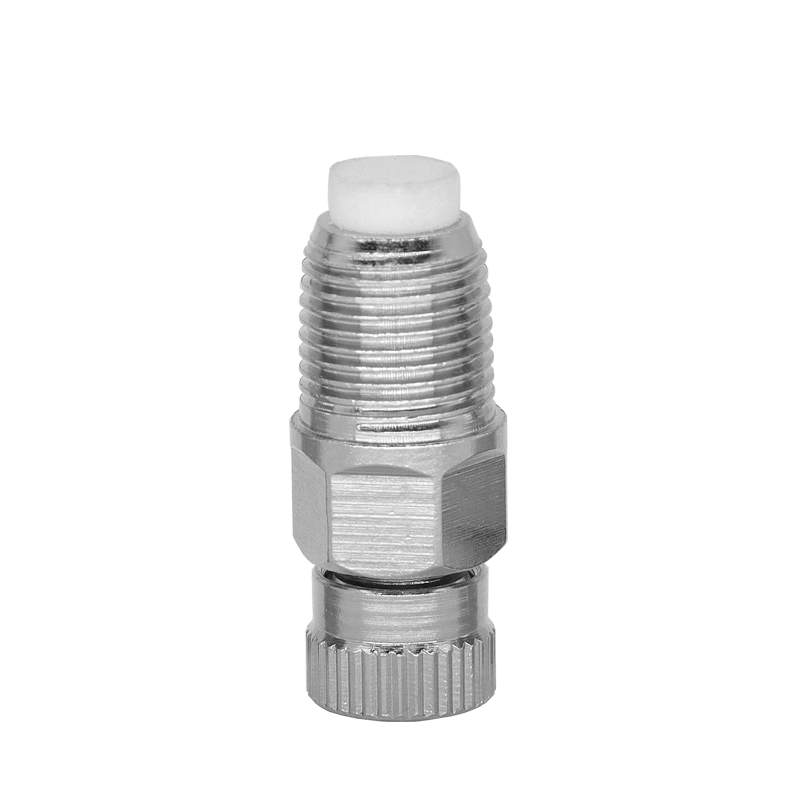

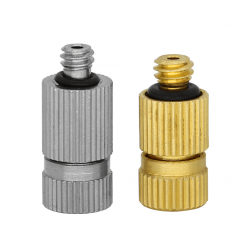
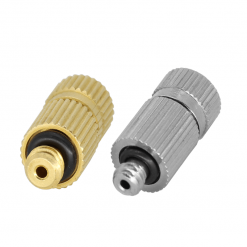
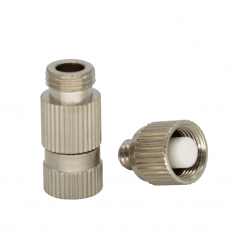
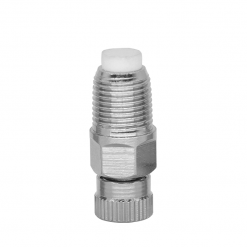
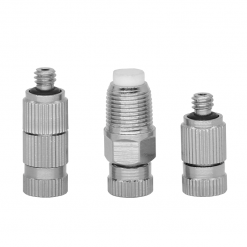
anti drip misting nozzle is designed for fine-spray systems that require prompt shutoff and reduced residual dripping. It supports high-pressure cooling, humidification, dust suppression and other installations where uncontrolled after-drip can wet products, floors or equipment.
Anti Drip Misting Nozzle Engineering Overview
The integrated shutoff (check-valve) concept helps isolate liquid flow when system pressure falls below the closing threshold. Actual response depends on the nozzle configuration, spring and seal condition, line pressure decay and fluid cleanliness. The nozzle should therefore be selected as part of the pump, filtration, valve and header system rather than as an isolated component.
Typical Applications
- Evaporative cooling in factories, outdoor areas and livestock facilities
- Humidity control for textile, paper, printing and storage processes
- Fine dust suppression at transfer points and enclosed work zones
- Intermittent misting where clean start-stop behavior reduces wetting
- Odor control and light chemical spraying with compatible materials
Key Selection Criteria
Correct nozzle selection depends on the complete operating envelope, not flow rate alone. Confirm the required coverage, droplet or atomization target, liquid properties, available pressure, duty cycle, installation space and allowable maintenance interval before specifying a model.
| Selection factor | Engineering question |
|---|---|
| Droplet objective | Define whether the process needs rapid evaporation, surface wetting or airborne capture. |
| Operating pressure | Confirm normal, minimum and maximum pressure at the nozzle after line losses. |
| Shutoff behavior | State the acceptable closing response and whether a central valve is also used. |
| Fluid quality | Identify solids, hardness and contamination to size filtration and maintenance access. |
| Material and seal | Check chemical, temperature and environmental compatibility for body and elastomers. |
| Connection and layout | Confirm thread, adapter, nozzle spacing, height and service clearance. |
Performance and System Integration
For fine misting, pressure stability and clean liquid supply are essential. Size the pump for total nozzle flow plus control margin, use suitable relief and regulation, and avoid dead legs that trap debris. When cycling frequently, evaluate valve timing and line volume because retained pressure can delay shutoff even when an anti-drip component is present.
Final performance should be verified under actual process conditions. Pump pulsation, pressure loss through filters and valves, fluid temperature, viscosity, suspended solids, nozzle spacing and target distance can all change the delivered pattern. For multi-nozzle headers, balance branch losses and provide pressure measurement near the spray points.
Materials, Filtration and Maintenance
Mineral scale and small particles can alter atomization or prevent reliable seating. Install staged filtration where water quality is variable, flush new pipework before commissioning and provide a cleaning method appropriate for the material. Check seals and the internal shutoff element during planned maintenance.
- Use filtration matched to the smallest internal passage and the contamination load.
- Inspect pattern quality, flow consistency, seals and connections on a documented schedule.
- Clean with a compatible non-damaging method; avoid tools that can enlarge the orifice.
- Replace worn components when flow, coverage or shutoff performance moves outside the process tolerance.
Information to Include with Your RFQ
For an application-specific recommendation, provide the liquid name and concentration, temperature, viscosity, target flow per nozzle, available liquid and air pressure where applicable, spray distance, required coverage, duty cycle, connection preference, material restrictions and site environment. Photos or a simple installation drawing help our engineers evaluate mounting and access.
Frequently Asked Questions
What does an anti drip misting nozzle prevent?
It helps reduce liquid discharge after system pressure drops. This can limit unwanted wetting, but complete system behavior also depends on valves, line volume, height differences and pressure decay.
How should filtration be selected?
Base filtration on the smallest passage in the chosen nozzle and the expected contaminant load. Water analysis is useful where hardness or mineral scale is a concern.
Can Jeltecn help validate the selection?
Yes. Jeltecn can review your operating data, installation constraints and spray objective before quotation. Sample or application testing may be recommended when liquid properties or coverage requirements are critical.
Request an Engineering Recommendation
Send your process data to Jeltecn for a practical anti drip misting nozzle recommendation. We will help compare configuration, material, connection and operating requirements for your application.
Contact Jeltecn for a quotation or explore our industrial spray nozzle range, applications and industry solutions.